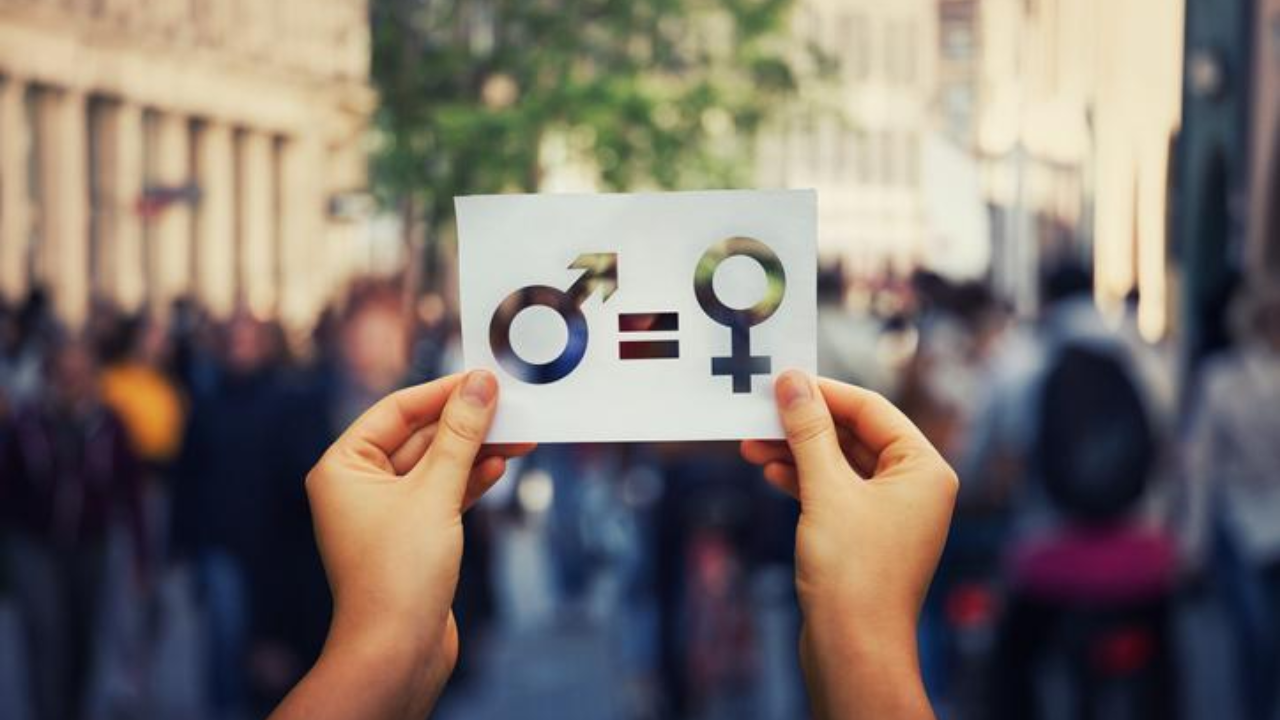
Equality is supposed to be a right, not a favor. Yet when a woman receives education, secures a job, speaks her mind, or simply expects to be treated with respect and dignity, she is often told to be grateful. Grateful to her parents for letting her study. Grateful to her husband for letting her work. Grateful to society for letting her live freely and make her own choices. The question is simple: if equality is a basic human right, why is it still treated like a gift given to women?
From childhood, many girls are taught a very different lesson than boys. Boys are told the world is theirs to explore. A girl is told to be thankful for whatever part of the world she is allowed to see. When a family allows their daughter to go to university, it is presented as a great act of generosity.
When a son is sent to university, it is simply expected. The difference is not in the opportunity itself, but in the way it is framed. For men, rights are normal. For women, rights are privileges.
This mindset does not stop in childhood. It follows a woman into every stage of her life. In many homes, a girl who wants to study further has to convince her family, prove herself, and promise that she will not bring shame to the family. She has to assure everyone that her education will not make her too bold, too outspoken, or too independent. A boy does not have to make such promises. He is not asked to be grateful for his education because education is seen as his natural right and simply expected of him. For a girl, the same education becomes a favour that she must repay with obedience, silence, and lifelong gratitude.
Even when a girl does get the chance to study, her journey is often filled with conditions. She can study, but only if she chooses a safe subject. She can go to university, but only if it is close to home. She can have dreams, but only if those dreams do not disturb the family’s plans for her marriage. Every step forward comes with a reminder: “We did so much for you, do not forget it.” Over time, this message settles deep in her mind. She starts believing that her freedom is not hers. It is borrowed, and it can be taken back at any moment.
This mindset continues in married life. If a husband helps with household chores, he is praised as a wonderful and progressive man. If a wife works a full-time job and then comes home to cook, clean, and look after the children, it is considered her duty. If she asks for an equal share of responsibilities, she is often called demanding or ungrateful. The husband is not expected to be grateful for her sacrifices, but she is expected to be grateful that he is not stopping her from working. This is not equality.
In many marriages, a woman’s career is treated as optional, while a man’s career is treated as essential. If the family faces a problem, it is always the woman who is expected to sacrifice first. She should leave her job if the children need her. She should adjust her timings if the in-laws need her. She should give up her dreams if the husband gets a better opportunity in another city. And if she does all this quietly, she is called a good wife. If she asks why only she has to adjust, she is called selfish. Equality in such households does not mean sharing the burden. It means the woman carries the burden and says thank you for being allowed to carry it.
The workplace tells the same story. When a woman is hired, promoted, or given a leadership role, people whisper that she should be thankful she was chosen. Her success is rarely seen as a result of her talent and hard work alone. She is expected to smile, stay humble, and never complain about unequal pay or unfair treatment. If a man demands a raise, he is called ambitious. If a woman demands the same, she is called difficult. Women are taught to accept less and to feel lucky for getting even that much. Over time, this teaches women to lower their expectations and to celebrate small wins as if they were big favors.
This pressure also affects a woman’s confidence. When she is constantly told to be grateful, she begins to doubt her own worth. She starts thinking that maybe she really did not deserve the job, the promotion, or the opportunity. She works twice as hard to prove that she is worthy, while her male colleagues work normally and are still praised. She avoids speaking up in meetings because she does not want to seem ungrateful. She avoids asking for help because she does not want to seem weak. Slowly, gratitude becomes a cage that keeps her small, quiet, and afraid to ask for more.
One of the main reasons for this is our cultural idea of gratitude. In many societies, especially in South Asia, a good woman is defined as one who does not complain. She adjusts, sacrifices, or stays silent. Gratitude is used as a tool to keep her silent. She is told, “Look at other girls who do not even get this much. You should be thankful.” This comparison stops her from asking for more. It makes her feel guilty for wanting what is already hers by right. It also creates fear. If she asks for too much, she might lose even the little freedom she has.
Social media has made this even more visible. When a man posts a video of himself cooking or looking after his children, thousands of people praise him. When a woman does the same thing every day, no one notices. When a father allows his daughter to work, people call him a hero. When a mother allows her daughter to make her own choices, she is called too modern. The bar for men is set so low that basic decency looks like greatness, while the bar for women is set so high that even excellence looks ordinary. A woman has to be perfect to be respected, while a man only has to be present to be praised.
True equality does not come with conditions. It does not say, “We will give you freedom, but you must thank us every day for it.” True equality means a woman does not need permission to live her life. It means her education, career, choices, and her voice belong to her, not to someone else kind enough to grant them. It means she can disagree, she can demand, and she can dream without being called ungrateful. It means her “no” is respected, her “yes” is valued, and her opinion is heard without her having to apologize for having one.
It is time to change the language we use. Instead of telling women to be grateful for equality, we should ask why equality was denied to them in the first place. Instead of praising men for allowing women to be free, we should normalize a society where no one needs permission to be equal. Parents should not be praised for letting their daughters study; they should be expected to do so. Husbands should not be praised for letting their wives work; they should be supportive of their dreams and choices. Employers should not be praised for hiring women; they should be hiring talent irrespective of gender.
Change will not come only from women speaking up. It must also come from families, husbands, teachers, and employers who stop treating equality as a gift. When a daughter is born, she should not have to earn her right to live freely. When a woman gets married, she should not have to earn her right to work. When a woman enters the workplace, she should not have to earn her right to be respected. These rights should be hers from the very beginning.
Women are not asking for special treatment. They are asking for what was always theirs: respect, freedom, and fairness. And no one should have to say thank you for that.