EDITORIAL INVESTIGATIONS
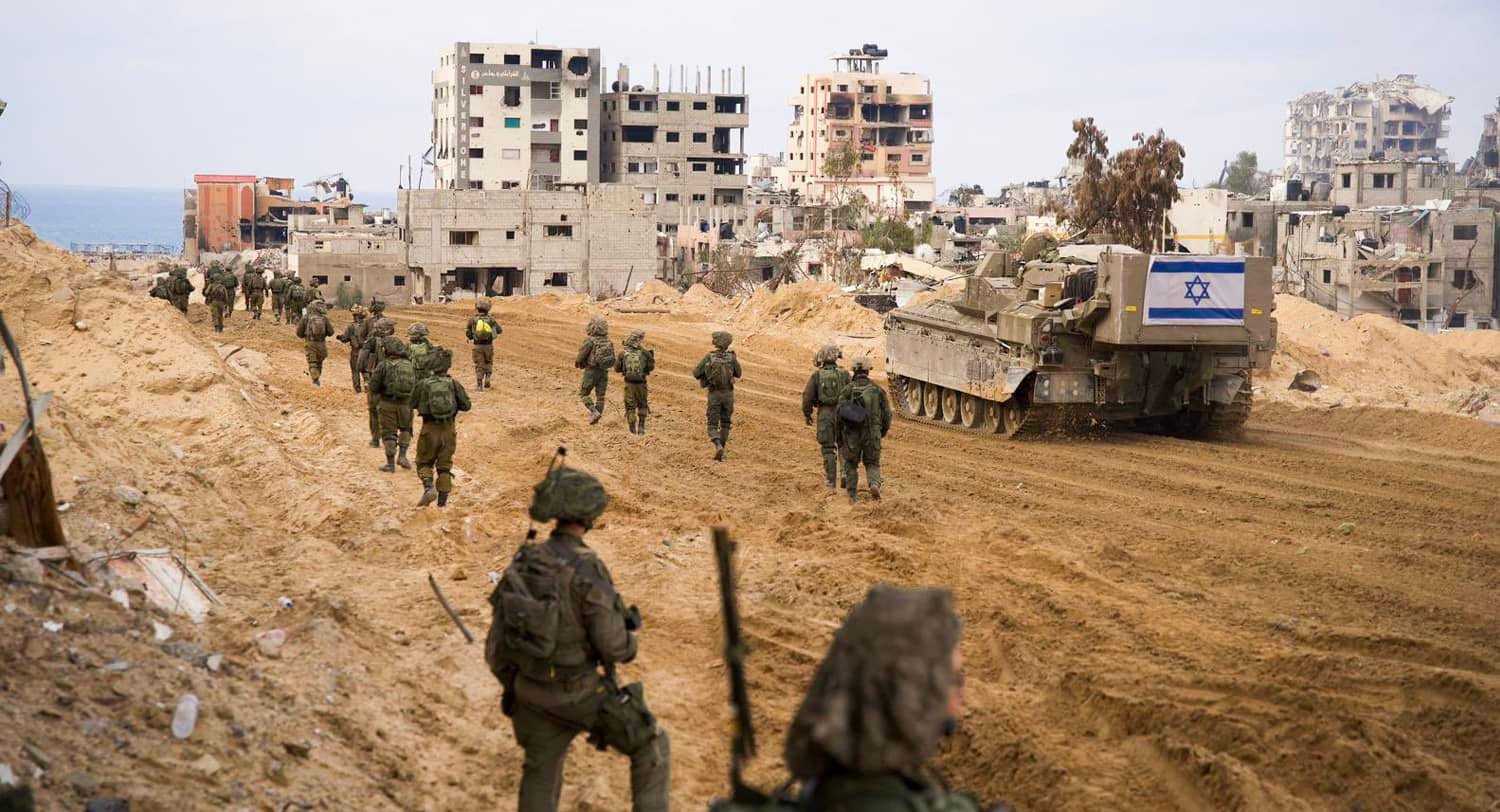
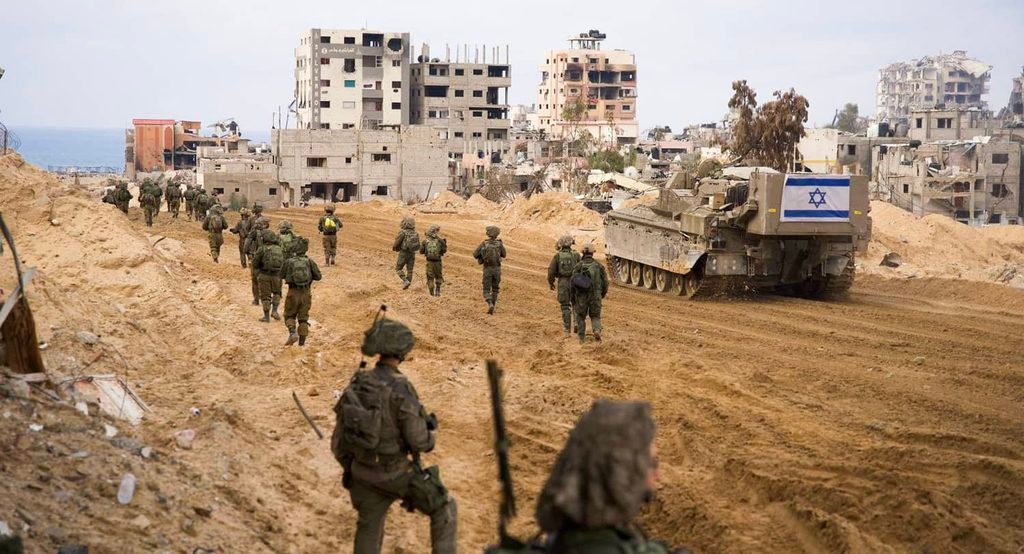
Since Israel opened its military campaign in Gaza after the Hamas attack of Oct. 7, 2023, in which Israeli authorities say about 43 people were killed and roughly 250 taken hostage, the Gaza Health Ministry has recorded more than 82,000 Palestinian deaths. That count was reached by the time a ceasefire took hold in October 2025. UN agencies and independent analysts have generally treated the ministry figures as credible. Israel disputes how many of the dead were civilians.
The war has also produced something unusual for a modern conflict: a growing body of formal legal findings. The International Court of Justice has issued binding orders. The International Criminal Court has issued arrest warrants. A UN commission has published a legal analysis under the Genocide Convention. The Security Council and General Assembly have voted repeatedly. This article relies on those instruments and on treaty text and statutes. It does not rely on press reports, and where a legal question is still open it says so.
The International Court of Justice
South Africa filed its case under the Genocide Convention in December 2023. On Jan. 26, 2024 the court found that some of the rights South Africa asserted were plausible and ordered Israel to take all measures within its power to prevent acts covered by the Convention. The court also told Israel to prevent and punish incitement, to enable basic services and humanitarian aid, and to preserve evidence. It repeated and widened those orders in March and May 2024, including an order concerning the Rafah offensive.
An order for provisional measures is not a finding of genocide. At this stage the court asks only whether the rights claimed are plausible and whether irreparable harm is a real risk. The merits have not been decided and the case is likely to run for years. Israel denies the allegation and says it is exercising its right of self defense against Hamas.
The order still matters to other governments. Article I of the Genocide Convention obliges every party to prevent genocide. In its 2007 judgment in Bosnia v. Serbia the court held that this duty begins once a state learns of a serious risk that genocide will be committed. After January 2024 no supplier state could say it had not been told of such a risk by the world’s highest court.
The UN Commission of Inquiry
On Sept. 16, 2025 the UN Independent International Commission of Inquiry on the Occupied Palestinian Territory, chaired by Navi Pillay, published a legal analysis of Israel’s conduct in Gaza under the Genocide Convention. It concluded that Israel has committed genocide against Palestinians in Gaza. It held Israel responsible for committing genocide, for failing to prevent it and for failing to punish those responsible. The commission examined both the underlying acts and the question of genocidal intent, and it treated statements by Israeli authorities as direct evidence of that intent.
The commission is independent and was created by the Human Rights Council. Its finding is authoritative but it is not the judgment of a court. Israel’s foreign ministry rejected the report as distorted and false and called for the commission to be abolished. The same commission has separately documented war crimes by Hamas and other Palestinian freedom fighters on Oct. 7.
The ICC arrest warrants
On Nov. 21, 2024 the ICC issued arrest warrants for Prime Minister Benjamin Netanyahu and former defense minister Yoav Gallant. Judges found reasonable grounds to believe that both bear criminal responsibility for the war crime of starvation as a method of warfare and for the crimes against humanity of murder, persecution and other inhumane acts, committed from at least Oct. 8, 2023 until at least May 20, 2024. The court also issued a warrant for the Hamas commander Mohammed Deif. Israel challenged the court’s jurisdiction and the judges rejected the challenge.
A warrant records a judicial finding of reasonable grounds. It is not a conviction. Neither man has been tried. All states parties to the Rome Statute are obliged to arrest and surrender a person named in a warrant who enters their territory, and several European governments have said they would not commit to doing so.
The Security Council and the General Assembly
The formal votes show where diplomatic protection was applied. The United States has cast six vetoes against Gaza ceasefire drafts since Oct. 7, 2023. The most recent, on Sept. 18, 2025, was a draft demanding an immediate and permanent ceasefire and the lifting of restrictions on aid. Fourteen members voted for it and the United States alone voted against. In the General Assembly, where no veto exists, ceasefire resolutions have passed by wide margins.
Date Body and text Vote Outcome
| Date | Instrument | Substance |
| 2016 | US Israel memorandum of understanding | $3.8 billion a year in military aid through fiscal 2028 |
| Dec 2023 | US emergency arms determinations | About $106 million in tank ammunition and $147.5 million in 155 mm shells, approved without normal congressional review |
| Feb 2024 | Hague Court of Appeal ruling | Netherlands ordered to stop exporting F35 parts to Israel |
| Apr 2024 | Public Law 118 50 | About $14 billion in additional military assistance for Israel |
| 30 Apr 2024 | ICJ order, Nicaragua v. Germany | Court declined provisional measures on German arms exports and kept the case open |
| Aug 2024 | US arms transfer notifications | About $20 billion in proposed sales including F15IA jets |
| Sep 2024 | UK export license decision | About 30 of roughly 350 licenses suspended; F35 parts exempted |
| Feb 2025 | US arms transfer notifications | More than $7 billion in munitions and guidance kits |
The American funding trail is set by statute. A 2016 memorandum of understanding commits Washington to $3.8 billion a year in military aid through fiscal 2028. In April 2024 Congress passed a national security supplemental, Public Law 118 50, that included roughly $14 billion in additional military assistance for Israel. Appropriations law enacted in March 2024 barred US contributions to UNRWA, the main UN aid agency in Gaza, and several other donor governments suspended their contributions in early 2024 after Israel alleged that some agency staff took part in the Oct. 7 attack.
Arms transfers are recorded in official notifications. Two December 2023 sales, tank ammunition worth about $106 million and 155 millimeter shells worth about $147.5 million, were approved under emergency authority that bypassed the usual congressional review. In August 2024 the State Department notified Congress of about $20 billion in proposed transfers that included F15IA fighter jets. In February 2025 it notified more than $7 billion in further sales of munitions and guidance kits.
Europe’s role is smaller and better documented in licensing data. The German government reported export licenses for Israel of about 326.5 million euros in 2023, up from about 32.6 million euros in 2022, with most of the 2023 approvals coming after Oct. 7. Britain suspended about 30 of roughly 350 export licenses in September 2024 but kept supplying parts for the F35 through a multinational pool.
Date Instrument Substance
2016 US Israel memorandum of understanding $3.8 billion a year in military aid through fiscal 2028
Dec 2023 US emergency arms determinations About $106 million in tank ammunition and $147.5 million in 155 mm shells, approved without normal congressional review
Feb 2024 Hague Court of Appeal ruling Netherlands ordered to stop exporting F35 parts to Israel
Apr 2024 Public Law 118 50 About $14 billion in additional military assistance for Israel
30 Apr 2024 ICJ order, Nicaragua v. Germany Court declined provisional measures on German arms exports and kept the case open
Aug 2024 US arms transfer notifications About $20 billion in proposed sales including F15IA jets
Sep 2024 UK export license decision About 30 of roughly 350 licenses suspended; F35 parts exempted
Feb 2025 US arms transfer notifications More than $7 billion in munitions and guidance kits
In July 2024 the ICJ issued an advisory opinion finding Israel’s continued presence in the occupied Palestinian territory unlawful. The court said other states must not render aid or assistance in maintaining that situation. The General Assembly endorsed the opinion in September 2024 with resolution ES-10/24.
National courts have begun to apply these duties. The Hague Court of Appeal ordered the Dutch government in February 2024 to stop F35 parts exports. A challenge to Britain’s F35 exemption was dismissed by the High Court in 2025. Judges have not agreed on how far the Arms Trade Treaty reaches.
What remains undecided
No court has ruled that genocide occurred. No court has ruled that any supplier state aided it. The ICJ merits phase could take years. Complicity under Article III(e) of the Genocide Convention requires proof that the supplier knew of the specific intent to destroy a group, which is a higher bar than knowing of a risk. Governments that supplied weapons say their transfers were lawful and that they pressed Israel privately to limit civilian harm. The United States and Germany have said the evidence does not meet the legal definition of genocide.
The record does establish narrower points that are serious on their own. The highest court in the UN system found a plausible risk to protected rights. A UN commission found genocide. Judges found reasonable grounds to believe two senior officials committed crimes against humanity. The Security Council was blocked six times from demanding a ceasefire. Every state that kept supplying arms after those findings now faces legal questions that will outlast the war.
Documents cited
- ICC, Situation in the State of Palestine, press release of 21 Nov 2024, icc-cpi.int/news/situation-state-palestine-icc-pre-trial-chamber-i-rejects-state-israels-challenges
- ICC Pre-Trial Chamber I, decision ICC-01/18, 21 Nov 2024, icc-cpi.int/sites/default/files/CourtRecords/0902ebd180a0ebd8.pdf
- OHCHR, “Israel has committed genocide in the Gaza Strip, UN Commission finds,” 16 Sep 2025, ohchr.org/en/press-releases/2025/09/israel-has-committed-genocide-gaza-strip-un-commission-finds
- UN Commission of Inquiry, legal analysis A/HRC/60/CRP.3, 16 Sep 2025, ohchr.org (session 60 advance version)
- UN Security Council meeting coverage SC/16174, 18 Sep 2025, press.un.org/en/2025/sc16174.doc.htm
- UN Security Council draft resolution S/2025/583, 18 Sep 2025, and S/2025/353 and S/2024/835, UN Digital Library
- ICJ, South Africa v. Israel, case 192, order of 26 Jan 2024 and later orders, icj-cij.org
- ICJ, Nicaragua v. Germany, case 193, order of 30 Apr 2024, icj-cij.org
- ICJ, Legal Consequences arising from Israel’s Policies in the Occupied Palestinian Territory, advisory opinion of 19 Jul 2024, icj-cij.org
- Convention on the Prevention and Punishment of the Crime of Genocide (1948), Articles I and III
- Arms Trade Treaty (2013), Articles 6 and 7
- International Law Commission, Articles on Responsibility of States for Internationally Wrongful Acts (2001), Article 16