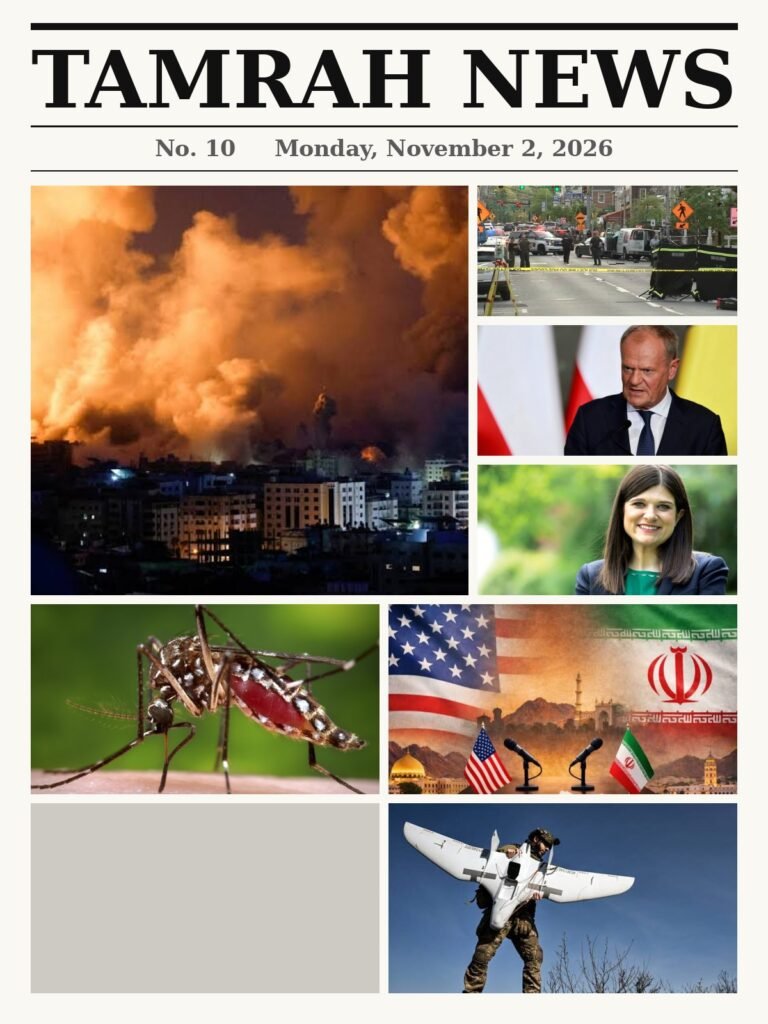
Think about the last time you scrolled through the news before getting out of bed. A city under attack. A heat wave warning. A figure about people on the run from their homes. Then, with one flick of the thumb, a cricket score, a wedding video, an advert for a sale. Your heart barely had time to register the first item before the second arrived.
If that feels familiar, you are not a bad person. You are living in the middle of an attention problem, and it is bigger than any of us.
Start with the numbers, which are hard to picture but worth trying. UNHCR, the UN refugee agency, reported in June that 117.8 million people were forcibly displaced at the end of 2025. That is about one in every 70 people on Earth. Imagine a packed lecture hall of 70 students, and one of them has been driven from home by war or persecution. Separately, the UN’s Global Humanitarian Overview estimates that 239 million people will need emergency help this year.
There was, however, a flicker of relief. The total number of forcibly displaced people fell for the first time in a decade…helped by a record 14.7 million people returning to where they came from. But UNHCR was careful to note that many went back to fragile conditions, and that new fightings was already uprooting more families. It counted over a million people displaced in Lebanon and 3.2 million inside Iran.
Now compare the need with the response. Last year’s UN appeal raised only about $12 billion, the lowest in ten years. As a result, aid agencies reached 25 million fewer people than in 2024. For 2026, humanitarian groups asked for $33 billion to help 135 million people. Then, expecting donors to fall short, they published a core plan of $23 billion for the 87 million people in the direst circumstances. In plain terms, aid planners are deciding who comes first before the year has even started. Tom Fletcher, the UN’s emergency relief chief, called it helping people “life by life”. It is a gentle phrase for a hard choice.
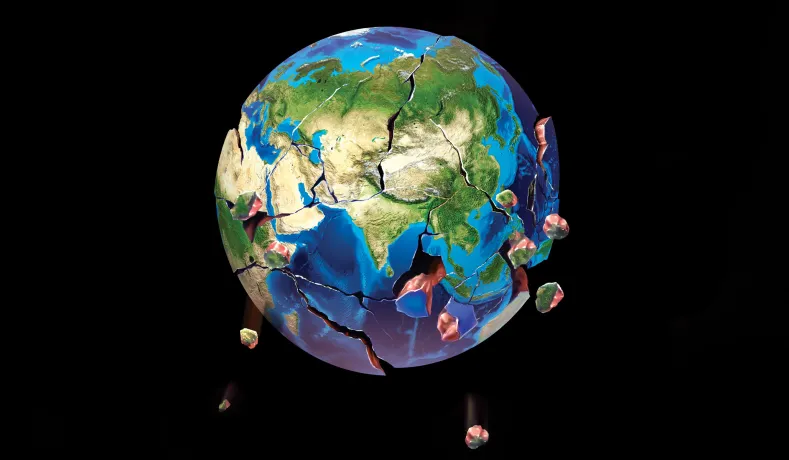
Climate change makes the problem trickier, because it lacks the drama we are trained to notice. A war has a start date and a front line. Warming has neither. The World Meteorological Organization found that 2015 to 2025 were the eleven hottest years on record, with 2025 about 1.43°C above pre-industrial levels. European scientists also confirmed that 2023 to 2025 was the first three-year stretch to average above 1.5°C, the limit the Paris Agreement aimed to avoid. The UN Secretary-General, António Guterres, called the state of the climate an emergency. Yet most of us meet it in small pieces: a hotter summer, a flooded road, a pricier harvest. Each feels like an isolated bad day rather than part of one long story. So where do the media fit in? They are an easy target, though the truth is less tidy. Newsrooms are smaller than they used to be, and they are competing with everything else on your phone. A new war grabs attention. A war in its third year struggles to, even if more people are suffering by then. Social platforms make it worse by placing a famine, a celebrity row and a food video in the same scrolling stream. Editors seldom choose indifference. They follow what audiences read, and audiences are worn down.
Psychologists have a name for part of this. Paul Slovic has shown that people tend to give more financial assistance to one named person than to a crowd of thousands, and he calls the effect “psychic numbing”. The bigger the number, the smaller the feeling. Add the popular idea of “compassion fatigue”, and it can sound as if the public has simply run out of energy. But that explanation lets someone off the hook. Switching off is a normal way to cope when a problem feels too large. Yet when a cause becomes specific, say a family you can picture or a village you can name, people still give. The largest funding decisions are not made by weary readers on their morning commute. Governments make them, and many have chosen to reduce foreign aid while facing pressure at home. Calling that “public fatigue” quietly moves the responsibility from those who hold the budgets to those who hold the phones.
To be fair, the institutions are not all one block. Some donors argue that aid systems have become slow and top-heavy, and that criticism has merit. The UN says its current plan is built on reform, including sending more money through local organisations, which aid workers have asked for over many years. Those changes are worth making. But efficiency cannot cover a gap measured in billions.
The danger is a loop. Long crises attract less coverage. Less coverage weakens public pressure. Weaker pressure shrinks budgets. Smaller budgets leave the next emergency with a thinner response, and the cycle starts again, a little faster each time.
Nobody can carry every crisis in their head, and nobody should try. What we can do is take a series of smaller, more realistic actions to stay informed about humanitarian crises and in a position to be able to help those affected by them. Notice which story you scroll past, then go back to it. Follow one crisis properly rather than twenty badly. Support a cause you can understand, and ask what your own government is doing. Newsrooms, for their part, can keep returning to stories long after they stop feeling new, and governments can treat aid as a promise rather than a favour.
Urgency does not come built into a disaster. It is a decision societies make, and then pay for. At the moment, we are deciding that almost nothing is urgent enough. That is a choice, and it can still be changed.