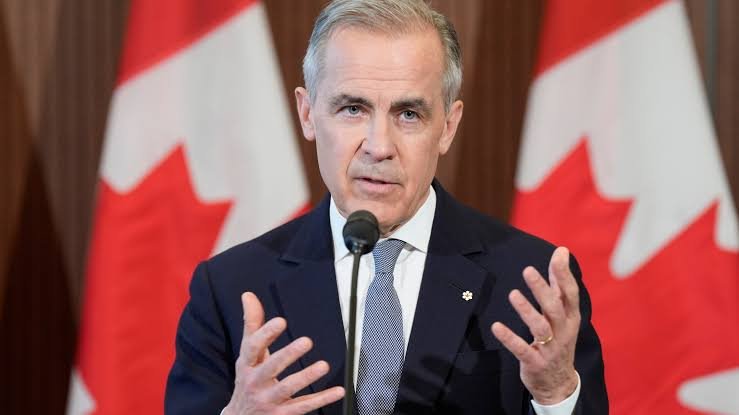
Canadian Prime Minister Mark Carney announces plans to fast-track the Pacific Link oil pipeline in Alberta.
What Is Canada’s Pacific Link Pipeline?
Canada is moving to fast-track the approval of the proposed Pacific Link oil pipeline, a major project designed to expand the country’s crude oil export capacity and diversify its energy markets beyond the United States.
Prime Minister Mark Carney announced on October 1 that Ottawa would officially designate the pipeline as a project of national interest. This designation allows the project to proceed through a single federal regulatory review process, with the government targeting completion of the process by September 1, 2027.
The pipeline was originally announced in July and is planned to transport around 1 million barrels of crude oil per day to Canada’s west coast.
Why Is Canada Building the Pipeline?
Canada currently sends more than 90% of its crude oil exports to the United States, according to Reuters. The Pacific Link project is intended to give Canadian producers greater access to international markets and reduce dependence on a single major trading partner.
The new pipeline would connect Canada’s oil-producing regions with the west coast, creating a route for exports to markets in Asia and other parts of the world.
Carney said the project is part of Canada’s broader effort to double its non-U.S. exports over the next decade and expand its position as a global energy supplier.
How Much Oil Will the Pipeline Carry?
The proposed Pacific Link pipeline is expected to have a capacity of approximately 1 million barrels of crude oil per day.
Canada already has the Trans Mountain pipeline, which has an east-west export capacity of about 890,000 barrels per day following its 2024 expansion. Reuters reported that the existing system is already operating at capacity.
The additional capacity would give Canadian oil producers another route to international markets.
How Much Could the Project Contribute to Canada’s Economy?
The Canadian government estimates that the project could create around 140,000 jobs and generate more than C$20 billion in GDP annually.
Ottawa also estimates that the pipeline could generate approximately C$100 billion in government revenue by 2060. These figures are government projections rather than guaranteed economic outcomes.
The estimated cost of the pipeline is between C35.2billionandC43.7 billion, according to Reuters.
Who Will Build the Pipeline?
The project is expected to be developed by government-owned Trans Mountain Corp. in coordination with Pembina Pipeline Corp.
The federal government and the government of Alberta are expected to be the majority owners. Indigenous communities will also be offered a minimum 10% ownership interest in the project.
The Fort McKay First Nation has indicated interest in potentially taking an equity stake in the pipeline.
Why Are Asian Markets Important?
The Pacific Link pipeline could give Canadian producers greater access to Asian energy markets.
Reuters reported that demand from major Asian oil importers is an important factor behind Canada’s push to expand its export options. The project could allow Canadian crude to reach markets beyond the United States, particularly as global energy markets respond to geopolitical developments.
However, increasing exports would also require sufficient oil production to fill the new pipeline. Reuters noted that this could require new oil sands expansion, something Canadian companies have not undertaken on a large scale for more than a decade.
What Happens Next?
The Pacific Link project will now move through a federal regulatory review under Canada’s national-interest framework.
The government aims to complete the regulatory process by September 1, 2027. The project will also require continued consultation with Indigenous communities and other stakeholders.
For now, the confirmed development is that Canada has formally moved to accelerate the approval process for the proposed pipeline as part of its strategy to expand international energy exports and reduce its dependence on the U.S. market.
– Laraib Ali
Sources
Associated Press
Headline: “Canada fast-tracks Pacific oil pipeline to reduce US dependence as Alberta separation vote nears”
Publication Date: October 2, 2026
URL: https://apnews.com/article/68539133d6e0245fad3622263afd4aeb
South China Morning Post
Headline: “Canada fast-tracking oil pipeline designed to diversify economy away from US”
Publication Date: October 2, 2026
URL:https://www.scmp.com/news/world/united-states-canada/article/3369484/canada-fast-tracking-oil-pipeline-designed-diversify-economy-away-us
Reuters
Headline: “Canada to fast track oil pipeline designed to diversify economy away from US”
Publication Date: October 1, 2026
Publication Time: 15:17:12 UTC / 8:17 PM PKT
URL:https://www.reuters.com/business/energy/canada-fast-track-oil-pipeline-designed-diversify-economy-away-us-2026-10-01/
Mining Weekly
Headline: “Canada to fast track oil pipeline designed to diversify economy away from US”
Publication Date: October 2, 2026
URL:https://www.miningweekly.com/article/canada-to-fast-track-oil-pipeline-designed-to-diversify-economy-away-from-us-2026-10-02