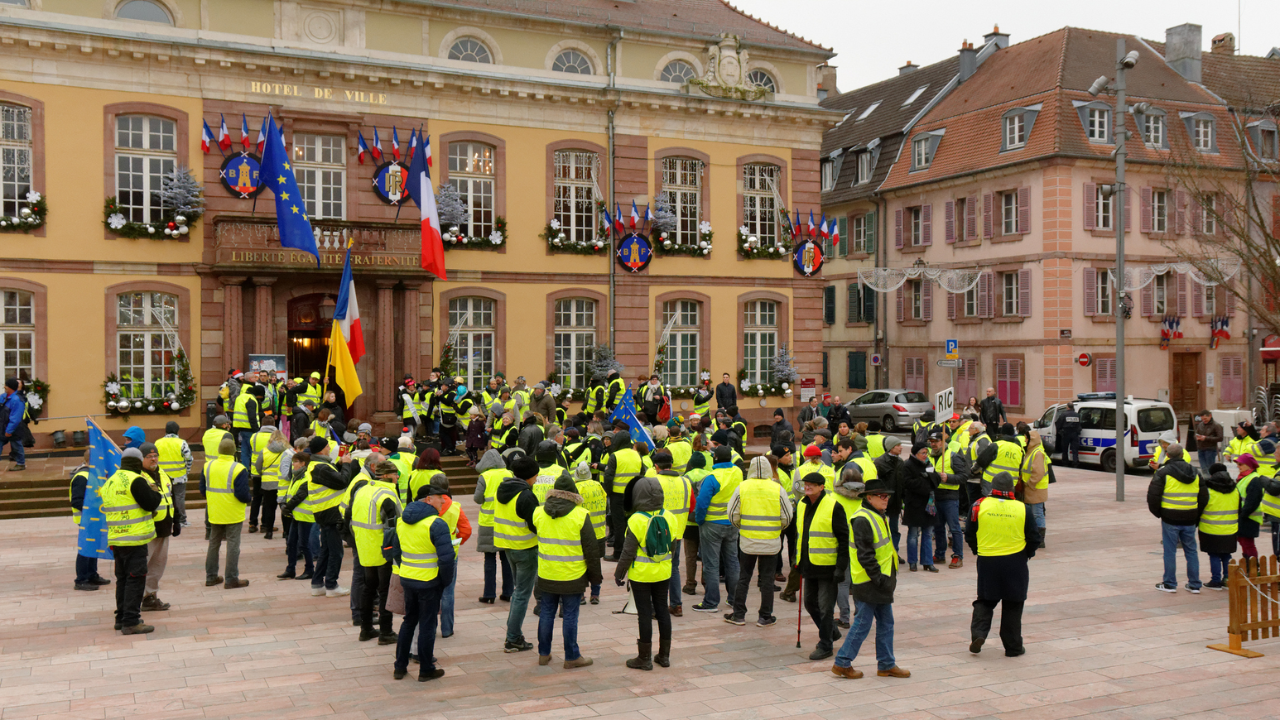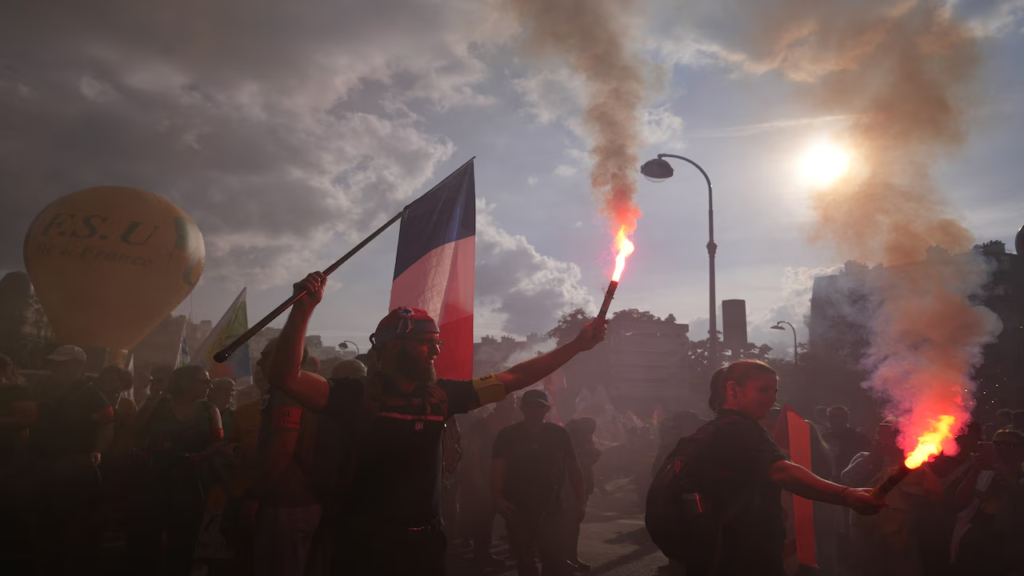
Students, trade unions and Yellow Vest activists marched in cities across the country on Saturday as authorities braced for clashes after weeks of school led unrest.
France protests entered a new phase on Saturday, October 17, as students, trade unionists and members of the Yellow Vest movement rallied against high prices and what Reuters described as the country’s fraying social model. The marches follow weeks of French student protests that Prime Minister Sébastien Lecornu has described as among the most violent in decades, according to Reuters.
What Is Driving the France Protests Today?
The cost of living crisis and rising fuel prices sit at the center of Saturday’s demonstrations, according to Euronews. The outlet reported that trade unions and citizens calling themselves yellow vests are marching, with large numbers of students expected to join. The Yellow Vest movement first emerged in 2018 in response to a planned fuel tax increase, Euronews noted.
The current unrest began in late September, when students blocked entrances to hundreds of high schools over run down buildings and teacher shortages, Al Jazeera reported. Euronews said the four weeks of French student protests have also focused on teacher absences and overcrowded classrooms.
Yellow Vest Protests Meet Student Protests in Paris and Marseille
In Marseille, protesters set bins and electric scooters on fire on Saturday morning, and riot police stepped in, Euronews reported. Shops across the country boarded up their windows to guard against looting or damage, the outlet added.
France 24 reported that Paris police arrested 40 people after checks across the capital by 9:30 am, citing the city police prefecture. Its live coverage later put the nationwide total at 166 arrests by midday. It also described police firing tear gas and charging protesters with batons in Paris, and reported that protesters blockaded the Paris offices of the broadcaster CNews.
Euronews said a source close to the Interior Ministry expected about 500 actions and around 90 protests nationwide. Reuters said tens of thousands of people were expected to take part.
Will Stun Grenades Be Used Again at the Protests?
France had suspended the use of stun grenades at student demonstrations, but Interior Minister Laurent Nuñez said they could be used on Saturday, Reuters reported. Euronews said he told the press they would be allowed only if serious urban violence broke out.
The decision follows scrutiny of police conduct. Nuñez told the Senate that 36 investigations into alleged police violence had been opened, Euronews reported, while Reuters said the internal police watchdog is examining at least two dozen cases. Two incidents drew particular attention: a 15 year old who allegedly lost an eye after being struck by a rubber bullet, and a 14 year old who reportedly lost a hand after picking up a stun grenade. Euronews said both remain under investigation.
Injuries and Political Pressure on the Government
Sébastien Lecornu said on Thursday that 937 police officers and gendarmes had been injured since the protests began, along with 248 students and 149 teaching staff, which Euronews said is the highest figure ever recorded by the Education Ministry. He warned that the school movement was turning into a wave of urban violence.
Alliance Police Nationale, one of the largest police unions, said it would file a complaint against the state over what it called contradictory orders given to officers, according to Euronews. The government has also accused the hard left France Unbowed party of fuelling unrest, and Euronews reported that its leader, Jean-Luc Mélenchon, later said he backs peaceful protest.
President Emmanuel Macron said on Friday that the right to protest is respected but “must be accompanied by respect for people and property,” according to Euronews.
Government Response and Student Demands
Education Minister Édouard Geffray pledged the urgent deployment of 3,000 extra teachers, Al Jazeera reported, and Lecornu ordered ministers to deliver an action plan by the end of October. Student unions have asked for 10 billion euros in education investment and say the prime minister has not addressed their demands, according to a CNN report carried by Scripps News.
The government is also dealing with a public debt crisis as it tries to pass an austerity budget through a divided parliament. Paris police and national forces remain on high alert in major cities.
FAQs
Why are there France protests today?
Students, unions and the Yellow Vest movement are protesting high prices, the cost of living crisis and weakening public services.
Who is taking part in the Yellow Vest protests in France?
Euronews reported that union members, farmers, students and activists calling themselves yellow vests are joining the Saturday demonstrations.
What are the French student protests about?
Al Jazeera reported that French student protests began in late September over dilapidated school buildings, teacher shortages and calls for more education funding.
How many people have been arrested in the France protests?
France 24 reported 166 arrests nationwide by midday on Saturday. Time reported that the Interior Ministry counted around 6,100 arrests from the start of the unrest to October 6.
Are the Paris protests violent?
Reuters reported that Lecornu has called the unrest among the most violent in decades, with more than 900 police injured. France 24 reported tear gas and baton charges in Paris on Saturday.
What has Sébastien Lecornu promised students?
Al Jazeera reported that Lecornu asked ministers for an action plan by the end of October, and that the education minister pledged 3,000 additional teachers.
Is it safe to travel to France during the protests?
In an October 5 alert, the U.S. Embassy in France advised avoiding areas around protests and said past demonstrations had turned violent. Check current official guidance before travelling.