Indigenous Adi communities say the Siang Upper Multipurpose Project threatens their ancestral villages, while India presents it as a safeguard against China’s Medog dam.
Tamrah News Desk | November 1, 2026
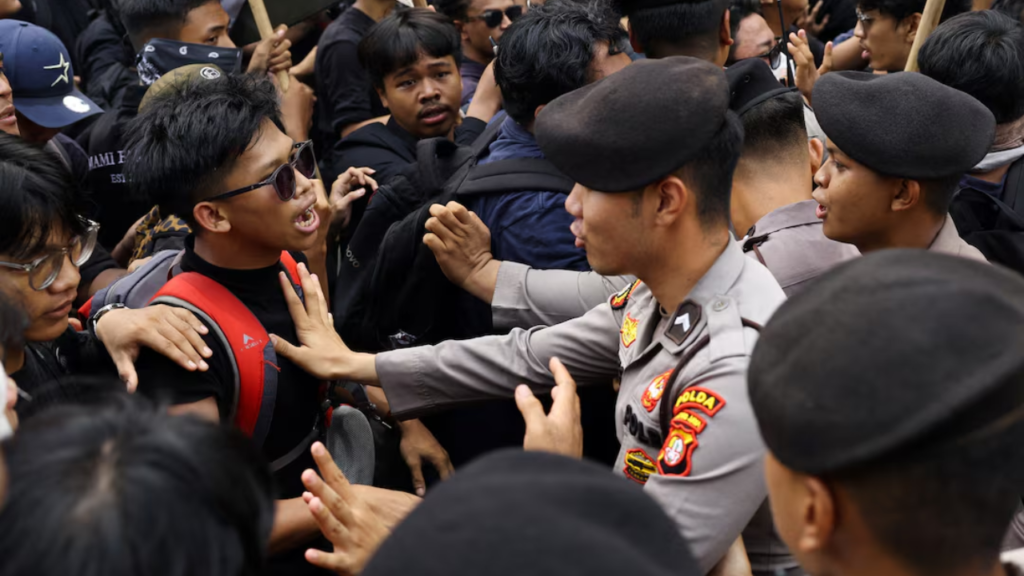
The Siang dam protest in Arunachal Pradesh has widened since violent clashes in Pasighat on October 23, as Indigenous Adi communities oppose an 11,200 megawatt hydropower project that India says will counter a Chinese dam upstream. According to Reuters, authorities have since sent hundreds of extra security personnel to the Siang Valley.
What Sparked the Siang Dam Protest in Pasighat
AFP reported that violence broke out late on October 23 during protests against the Siang Upper Multipurpose Project, which is planned by the state owned National Hydroelectric Power Corporation, known as NHPC. Chief Minister Pema Khandu told reporters that a mob destroyed property, including a police station and the NHPC office, and ransacked the homes of several elected representatives. AFP said about 40 police personnel were hurt by stones, and that police fired tear gas.
Down To Earth reported that the clashes followed a shutdown lasting 12 hours, called by groups including the Siang Indigenous Farmers’ Forum. Police said 200 to 300 people threw stones as darkness fell. Some protesters gave a different account, saying they heard explosions before stones came from both sides.
Khandu urged opponents of the project to engage with the government. AFP quoted him as saying,
“Question us, have dialogue with us, instead of violence.”
Arrests, a Hunger Strike and More Forces
Reuters reported on October 27 that Arunachal Pradesh police chief SD Singh Jamwal said forces were being increased wherever required. Down To Earth reported a day later that at least 26 people, including five juveniles, had been arrested. They include lawyer Ebo Mili and youth leader Otul Jerang, who surrendered on October 24 after the Pasighat violence. Mili remains on hunger strike in custody, while Jerang ended his fast after his health worsened. Jerang said the violence was
“completely contrary to our movement’s ideology and objectives.”
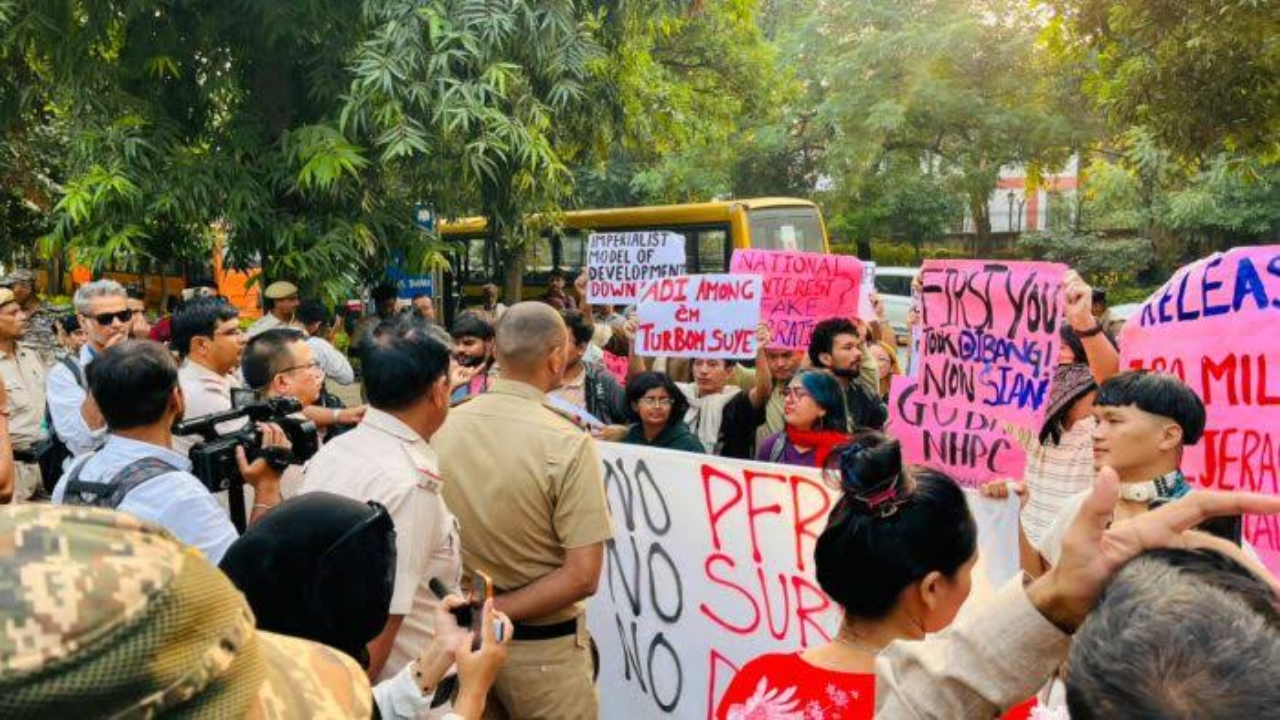
AsiaNews reported that the Union Home Ministry flew two Rapid Action Force companies, about 250 personnel, from Navi Mumbai on October 24. Bombay Samachar reported that protesters rallied again on October 29, demanding the release of detained activists and the cancellation of the dam.
Why Adi Communities Oppose the Arunachal Pradesh Dam
Reuters quoted Gegong Jijong of the Siang Indigenous Farmers’ Forum as saying 27 ancestral villages would be fully submerged and 40 or 50 more would be affected.
“We will keep opposing this dam till they cancel it,”
he said. Down To Earth reported that residents also fear ecological damage in a seismically active and biodiverse part of the Himalayas. The outlet added that NITI Aayog proposed the project in 2017, though some accounts trace local resistance to the 1980s.
Mongabay India reported that the Central Bureau of Investigation served the forum’s legal adviser, Bhanu Tatak, a notice in August over alleged foreign contributions of about 17.6 lakh rupees. The forum’s youth wing called the case harassment. AsiaNews reported that Tatak rejects the accusations.
Why Is India Building the Siang Upper Multipurpose Project?
AFP reported that India says the dam is needed to counter China’s $167 billion Yaxia project in Tibet, which New Delhi fears could affect downstream water flows. India says the reservoir would store water and help maintain flows into the Brahmaputra river. Beijing says its project will have no negative impact downstream, according to AFP. Down To Earth described the Chinese scheme as the 60,000 megawatt Medog dam and said the government presents the Arunachal Pradesh dam as a flood control and water security measure.
Khandu has called the Chinese project an existential threat, Reuters reported. Mongabay India reported that he has said the dam will be built only after all studies are completed. If a preliminary report finds it feasible, social and environmental impact assessments and a detailed project report would follow. AsiaNews reported that Himanshu Thakkar of the South Asia Network on Dams, Rivers and People says India lacks credible information on the Chinese project.
Border Tensions and What Comes Next
AFP reported that India’s foreign ministry said both sides remain in regular contact after a top border police official reported face offs with Chinese forces. For wider context, see Tamrah News coverage of India and China border relations.
Khandu held separate meetings on October 25 with legislators and the Arunachal Indigenous Tribes Forum, India Today NE reported. Bombay Samachar said he has invited community representatives for talks, while protesters seek the release of detainees, the withdrawal of cases and fewer central forces in the valley.
Conclusion
The Siang dam protest centres on the Siang Upper Multipurpose Project, which India links to national security and the Adi community links to land and river rights in Arunachal Pradesh. The Pasighat violence, extra forces and calls for talks keep the India and China dam dispute over the Medog dam in focus. Related coverage: Dubai AI Agent competition guide.