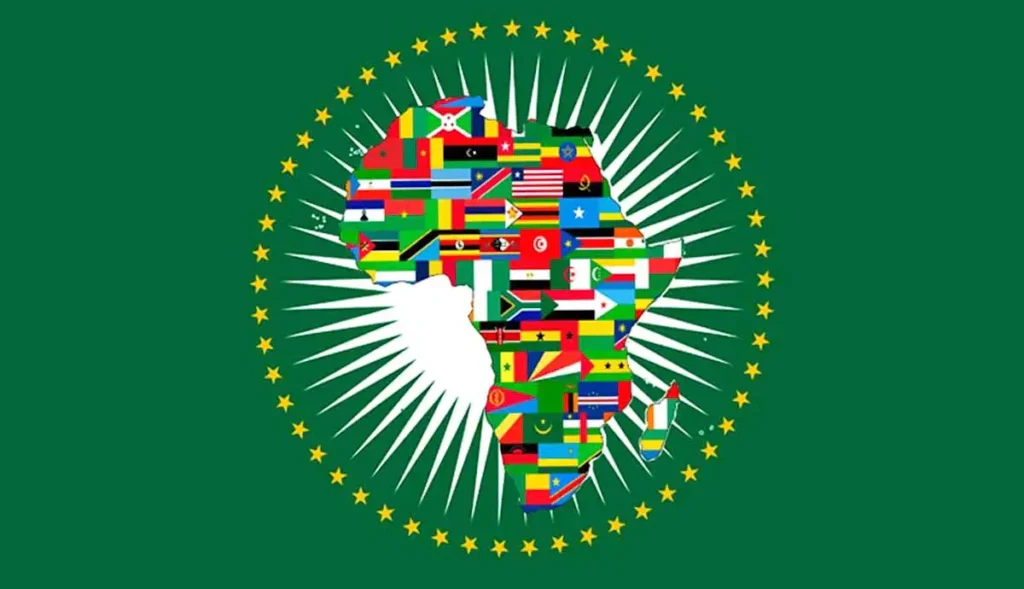
81 Years After Its Founding, the UN Security Council Still Has No Permanent African Seat
Africa is home to 54 countries and more than 1.5 billion people, yet it remains the only continent with no permanent seat on the UN Security Council. At the 81st UN General Assembly this week, African leaders and outgoing Secretary-General Antonio Guterres renewed calls to fix what they call an “unjust and indefensible” imbalance, reviving a two-decade-old reform push that keeps running into the same wall: the veto power of the five permanent members.
A Council Frozen in 1945
The UN Security Council was built for a world that no longer exists. Its five permanent, veto-wielding members — China, France, Russia, the United Kingdom and the United States — were fixed in place in 1945, when most of Africa was still under colonial rule. Eighty-one years later, the continent has 54 sovereign states and the world’s youngest and fastest-growing population, but still holds none of the Council’s permanent seats. Africa currently occupies three of the ten rotating, two-year non-permanent seats, alongside the Asia-Pacific, Latin American and Eastern European regional groups, but none of its representatives can cast a veto or serve for more than a fixed term.
The Ezulwini Consensus: Africa’s Unified Demand
Africa’s official negotiating position dates back to 2005, when the African Union adopted the Ezulwini Consensus in Eswatini. It calls for at least two permanent seats with full veto rights, plus an increase in Africa’s non-permanent seats to five. The African Union itself, rather than individual capitals, would nominate the countries to fill the permanent slots. Two decades on, that remains the continent’s baseline demand, even as debate continues within Africa over which countries would actually hold the seats.
Momentum at the 81st General Assembly
The issue resurfaced forcefully this week as leaders gathered in New York for the 81st session of the UN General Assembly. In his final address before stepping down, Secretary-General Antonio Guterres said a 21st-century Security Council without a permanent African seat was “unjust and indefensible,” arguing the body no longer reflects today’s geopolitical realities. Nigerian Vice President Kashim Shettima, speaking on behalf of President Bola Tinubu, said Africa deserves two permanent seats, telling delegates that the world of 2026 cannot stay bound to the power arrangements of 1945. Kenyan President William Ruto argued that the principle of sovereign equality enshrined in the UN Charter effectively stops at the Security Council’s door, since only five of 193 member states can single-handedly block a resolution. Namibian President Netumbo Nandi-Ndaitwah told the Assembly that African states have been negotiating for too long without results, while South Africa’s UN ambassador, Mxolisi Sizo Nkosi, said Pretoria continues to build support around the Ezulwini position.
Why Reform Keeps Stalling
Structural reform of the Security Council requires amending the UN Charter, which needs approval from two-thirds of the General Assembly and ratification by all five existing permanent members — giving each of them an effective veto over the very reform that would dilute their power. Talks have run for years through the General Assembly’s Intergovernmental Negotiations process, but positions remain split into rival blocs: the African Group and the G4 (Brazil, Germany, India and Japan) want new permanent seats, while the Pakistan-led Uniting for Consensus group wants only more non-permanent seats, not new veto-holders. Among the P5, China has voiced support for African representation but objects to Japan gaining permanent status, while Russia says it backs reform in principle but warns against expanding the Council too far. Analysts note that no permanent member has shown real willingness to share or limit its veto, leaving expansion talks gridlocked even as pressure builds from unresolved crises in Ukraine, Gaza and Sudan. Al Jazeera reported on September 26 that the Council adopted 44 resolutions in 2025 alone, 18 of them Africa-related, underscoring how central the continent already is to the body’s workload despite having no permanent voice in it. Ibrahim Gambari, a former Nigerian foreign minister and ex-UN permanent representative, told the outlet that the resistance runs deeper than geography, since even the choice of a new UN Secretary-General still requires the agreement of every permanent member.
What a Seat Would Actually Change
Beyond symbolism, a permanent seat — particularly one carrying veto power — would give African states a continuing role in decisions on peacekeeping, sanctions and international security, rather than a rotating voice every few years. It would also let African governments help shape the Council’s response to crises on their own continent, many of which already dominate the body’s agenda. For now, though, the gap between that ambition and the Charter’s amendment requirements means Africa’s seat at the table remains, as it has for two decades, a demand rather than a reality.
By MAIRA NOOR