Inequality can be taught to children without them realizing it. It starts with what they hear at home and school and shapes how they express emotions, speak out, and experience their self-worth.
A boy falls and scrapes his knee and starts crying. Someone tells him to be strong. A girl confidently speaks in class and is asked to be politer. Both kids are oblivious to the main point. But both are suffering an inequitable lesson. Boys are not supposed to show their emotions. Girls need to try to set their dreams in check. Workplaces and governments are blamed for gender inequality. But maybe the answer is to be found in a more unusual place. The playground. The classroom. The dinner tables. These are locations where inequality can start before kids can read.
Leaders are not born with a leadership license, and strength isn’t about being silent. These are introduced to them as a part of their everyday lives. UNICEF‘s report ‘Tackling Gender Inequality from the Early Years’ notes that children can identify gender stereotypes as early as the age of 2 or 3. Beliefs about intelligence can develop as early as the age of 6 and be negatively impacted by stereotypes about intelligence.
Consider the small occurrences that the adults engage in. Boys are encouraged to be brave. It is a good quality in girls to care. Boys are provided opportunities to explore. Girls are re-educated about their behavior. There is no bad choice in these qualities. The issue starts as soon as children learn that some attributes are reserved for one particular gender. A boy who doesn’t want to show sadness might be having difficulty letting his needs be known. If a girl wishes to appear not to be asking for too much, she might not be responsible. Seems like it’s a personality thing or more like a part of living years of socializing.
There are some people who think that preferences are gender specific and natural to the extent that boys’ and girls’ likes aren’t compatible with each other. Boys are competitive, and girls are cooperative. What if boys refuse to be competitive or girls hate to be cooperative? Would we treat it as normal or as taboo? According to the PISA 2022 results, mathematics anxiety was higher among girls than boys across most of the systems participating in the test. This difference was even bigger when the top two students were compared. This raises an uncomfortable question: Why would a girl who is objectively performing well still doubt her own abilities?
It would be incorrect to say that all differences are due to discrimination. An individual’s character and upbringing, as well as socio-economic experiences, have also an impact. However, making all differences seem natural fails to acknowledge the expectations children face on a frequent basis. UNESCO’s 2025 Gender Report identifies persistent barriers to women’s leadership in education, despite women forming much of the teaching workforce. This seemingly paradoxical situation seems concerning.
Girls can experience women as teachers, but fewer women in leadership positions.
When it comes to gender inequality, people talk as if it doesn’t affect anyone but girls. That overlooks another damaging lesson. Boys are often expected to be strong, self-assured, and self-regulated. Crying becomes a weakness. Help-seeking is so embarrassing. “Bottled Up and Breaking: The Impact of Masculine Norms on Emotional Expression and Psychological Distress in Adolescent Boys”, study followed 892 adolescent boys to understand masculine norms, emotional suppression and psychological distress. It found an association between conformity to traditional masculine expectations and distress through emotional suppression.
This discovery doesn’t imply that all emotionally introverted boys are unhappy. It defies the myth “silence is strength”. It’s hard for society to expect a man to be emotionally intelligent, yet it’s fair to raise boys not even anywhere near vulnerable.
Some may argue that to defy the gender stereotype is to defy tradition, or that it is a rejection of the difference between boys and girls. However, equality does not mean that children must be the same. It needs to provide them with real options. A chance to choose and the freedom to vocalize it. A boy should not be embarrassed about crying. A little girl shouldn’t be given a dollhouse to play with just because of her gender.
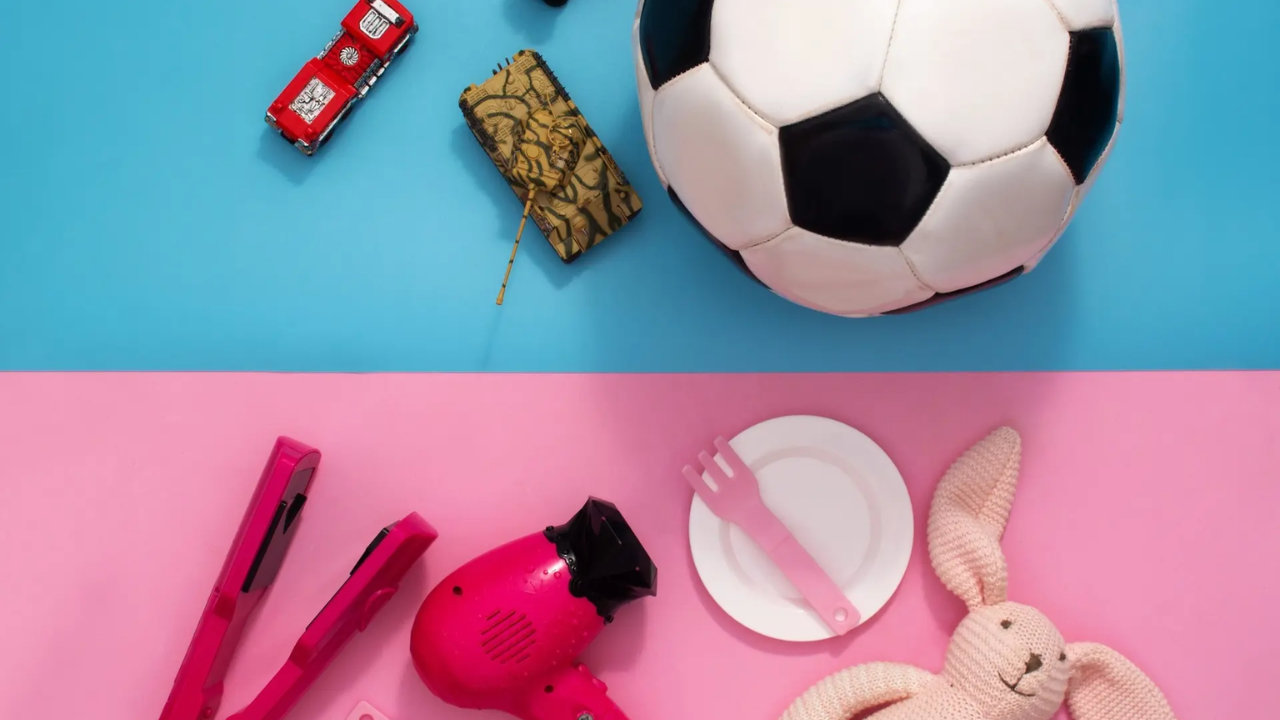
The problem lies in years of socialization and cultural norms that are passed on from one generation to the next as a yardstick for normal. Questioning the structural standards, from, let’s say, why blue must be the favorite color of a baby boy’s room to why can’t my aunty think of a woman running an office at NASA, will help us realize that the truth we are living is all made-up conventions.
If we want equality in the boardroom, we should encourage it in the classroom. Children are the agents of future civilization; teaching them B for Blue and P for Pink can cost us a generation of double standards and discrimination.