TAMRAH NEWS reports that protests across France have entered a more sustained and confrontational phase, building directly on the momentum of parallel social unrest in Spain and Albania. What began as student-led actions over school conditions and living costs has broadened into a multi-city mobilisation involving unions, residual Yellow Vest networks and ordinary citizens frustrated by inflation, housing pressures and perceived decline in public services. Despite the imposition of limited curfews in several urban centres and the mobilisation of military units alongside tens of thousands of police and gendarmes, demonstrators continue to take to the streets in significant numbers.
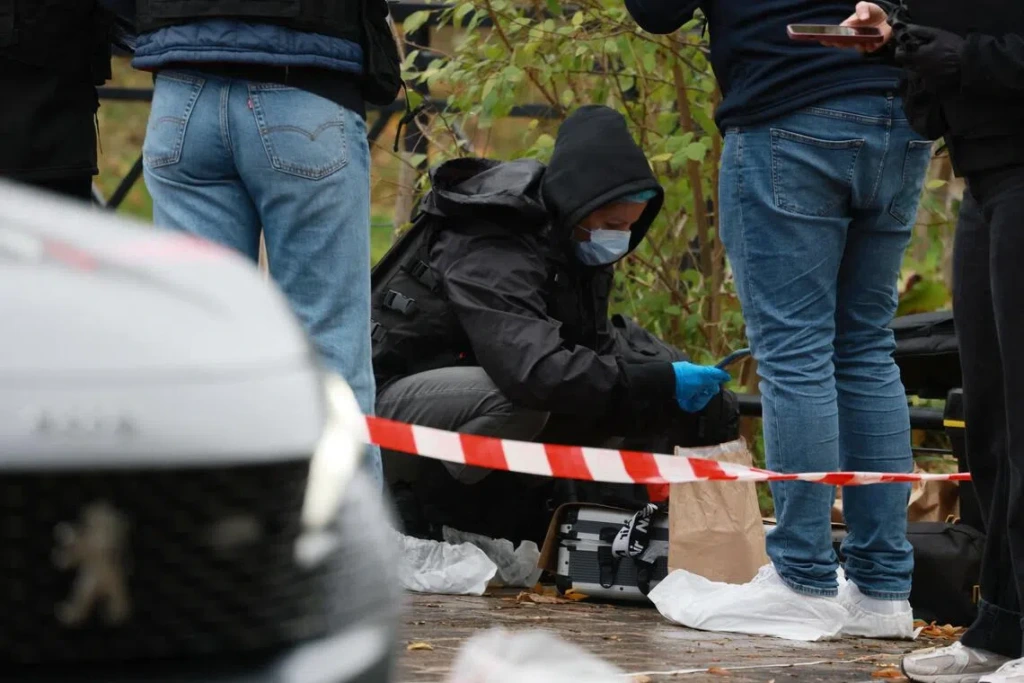
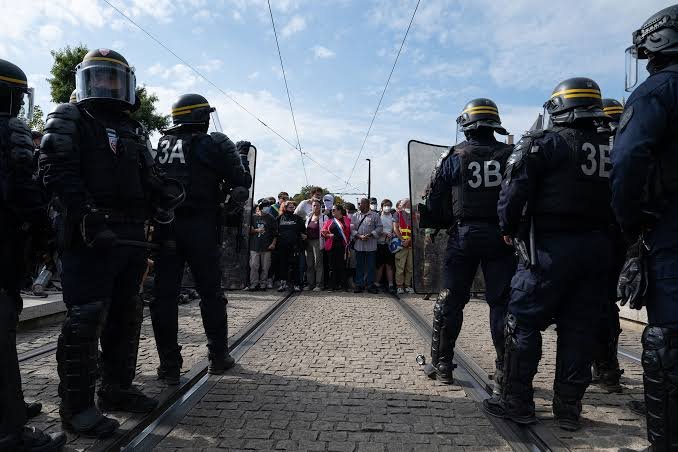
Official figures place weekend participation at approximately four hundred and ten thousand across the country, though union estimates are substantially higher. The largest single gathering occurred on the southeastern edge of Paris, where more than one hundred thousand people assembled. Similar marches took place in Marseille, Lyon, Bordeaux and numerous smaller cities. While the majority of daytime activity remained orderly, evening hours brought renewed confrontations. Protesters erected barricades, set fires and exchanged projectiles with security forces. Authorities responded with tear gas, water cannon and targeted arrests. Interior Ministry tallies indicate nearly one thousand detentions by late evening, with numbers expected to rise as processing continues.
The French government has acknowledged shortcomings in its earlier response. After the previous weekend’s widespread looting and property damage, Prime Minister Sébastien Lecornu announced a more robust posture. Seventy thousand officers and gendarmes were deployed, an increase of ten thousand from the prior mobilisation. Elite units normally reserved for counter-terrorism operations were integrated into the security plan. Targeted curfews restricted movement in selected districts of Paris, Marseille and other cities after nightfall. Military personnel appeared in support roles, a visible signal of the state’s determination to prevent a repeat of earlier disorder. Yet the presence of troops has not deterred turnout. Organisers and participants describe the measures as confirmation that their grievances have registered at the highest levels of government.
The French mobilisation does not exist in isolation. In Spain, tent encampments and street marches have focused on housing unaffordability and pension protections. The occupation of Madrid’s Puerta del Sol and similar actions in other cities reflect a generation locked out of independent living by soaring rents and stagnant wages. Demonstrators demand stronger tenant protections, expansion of public housing stock and linkage of pension increases to actual inflation. These actions have remained largely non-violent yet persistent, creating a sustained visual and political pressure that French organisers explicitly cite as inspiration.
In Albania the dynamic is sharper. Anti-government protests centred in Tirana have stretched across multiple consecutive days, drawing high-school and university students into a broader movement calling for the resignation of Prime Minister Edi Rama. Clashes with police have produced hundreds of injuries on both sides. Tear gas and physical confrontations have become routine. The Albanian unrest, driven by accusations of corruption, inadequate public services and limited economic opportunity, supplies French and Spanish activists with a narrative of regional contagion. Images and reports from Tirana circulate rapidly among European social networks, reinforcing the sense that discontent is not confined to any single national context.
French authorities have attempted to differentiate between peaceful economic protest and opportunistic violence. Interior Minister Laurent Nuñez has emphasised that the bulk of participants march without incident and that a minority of ultra-left or opportunistic elements exploit the gatherings for destruction. Hard-left political figures counter that the state’s heavy security footprint itself radicalises the periphery of the movement. Both observations contain elements of truth. Daytime marches often feature families, teachers, retirees and union members carrying signs about purchasing power and school funding. Night-time scenes more frequently involve masked individuals confronting police lines amid burning vehicles and shattered storefronts.
The economic backdrop is unambiguous. Energy prices, food costs and housing expenses have strained household budgets across income levels. Public services, particularly education and healthcare, face staffing shortages and infrastructure deficits that successive governments have struggled to reverse. President Emmanuel Macron’s administration, already navigating a difficult pre-electoral period, finds itself squeezed between demands for fiscal restraint and pressure for immediate relief. Limited measures such as temporary fuel price caps and emergency diesel releases have been introduced, yet they have not quenched the broader sense of stagnation.
European governments watch the French trajectory with concern. Similar cost-of-living pressures exist in Italy, Portugal, Belgium and beyond. The risk of cross-border learning and mutual reinforcement is real. When Albanian students see French unions mobilise hundreds of thousands, and when French Yellow Vest remnants observe Spanish pensioners occupying central squares, the psychological threshold for sustained action lowers. Governments that rely on targeted curfews and military support risk normalising exceptional measures that become politically costly over time.
For ordinary French citizens the calculation is personal. Many who join the marches express exhaustion rather than revolutionary fervour. They describe salaries that no longer cover rent and groceries, classrooms that lack basic resources, and a political class perceived as distant from daily realities. The presence of troops and the imposition of curfews heighten the sense that the state views their discontent as a security problem rather than a policy failure. That perception itself becomes a mobilising factor.
As night falls on successive weekends the pattern repeats. Authorised routes fill with marchers. Security forces hold perimeter positions. After dark the temperature rises in selected neighbourhoods. Arrests accumulate. Political leaders issue statements of firmness and readiness for dialogue. The underlying grievances remain unresolved. The French protests, amplified by concurrent actions in Spain and Albania, illustrate a continental moment of social friction in which economic pressure, institutional fatigue and digital connectivity combine to produce durable street presence.
TAMRAH NEWS will continue to report from the ground as the situation evolves. The combination of mass participation, state mobilisation and regional echo effects ensures that the coming weeks will test both the resilience of public order and the capacity of governments to address the material conditions driving citizens into the streets.