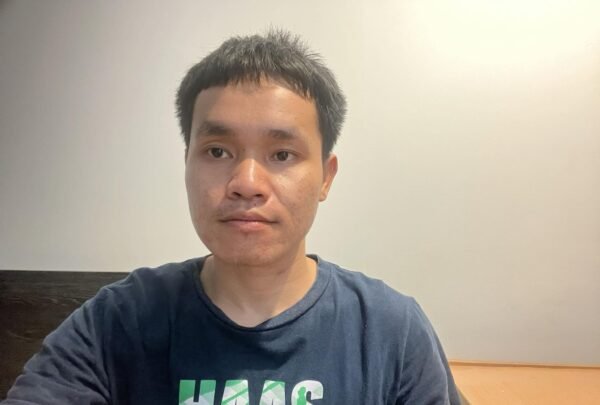
A 26 year old Lao activist seeking asylum in Thailand has disappeared under circumstances that have raised fears of enforced disappearance and possible transnational repression.
Khieo Lapchanh vanished in the early hours of September 15 after finishing his shift at a restaurant in Samut Sakhon province.
The timing has alarmed human rights organisations.
Khieo was due to have his first interview with the United Nations refugee agency in Bangkok the following day.
Three weeks later, Thai authorities have still not publicly explained where he is or what happened to him.
Human Rights Watch has called on Thai authorities to urgently escalate the investigation.
An activist who criticised the Lao government
Khieo had built an audience of approximately 158,000 followers on Facebook through his Khiew Channel account.
His content included criticism of the Lao government.
According to Manushya Foundation, which supported him, Khieo had faced coordinated harassment, doxxing and death threats.
The pressure reportedly intensified after Lao officials visited his mother’s home in Laos earlier this year in connection with his political activities.
Khieo subsequently stopped posting political content.
He then disappeared in Thailand.
No public evidence currently establishes who was responsible for his disappearance.
That distinction is important.
Human rights organisations have raised serious concerns, but responsibility remains unproven.
The timing has raised concern
Khieo’s disappearance occurred only one day before his scheduled UNHCR interview.
The UN refugee process could potentially have provided him with formal recognition and additional protection.
The coincidence has therefore become one of the most troubling aspects of the case.
Human Rights Watch says Thai authorities have not provided information about his whereabouts.
The organisation visited the area around his workplace and residence and found that several businesses with cameras facing the relevant streets had already lost their recordings because the footage had been automatically deleted.
That does not establish what happened.
But it makes the investigation more difficult.
A troubling regional pattern
Khieo’s disappearance is not occurring in isolation.
Human Rights Watch points to previous cases involving Lao activists who disappeared or were attacked while outside Laos.
In 2019, Lao democracy activist Od Sayavong disappeared in Bangkok after being recognised as a refugee by the UN refugee agency.
His fate remains unknown.
In 2023, Lao activist Bounsuan Kitiyano was shot dead in Thailand.
The cases have generated concerns about transnational repression.
The term refers to governments or their agents attempting to silence critics outside their own borders.
Such activity can include surveillance, intimidation, threats, abduction and violence.
Why Thailand matters
Thailand has obligations under its own law concerning enforced disappearance.
Its Prevention and Suppression of Torture and Enforced Disappearance Act came into force in 2023.
The law requires authorities to investigate cases where state involvement in disappearance may be possible.
Human Rights Watch argues that Thai authorities should urgently determine whether Khieo’s disappearance falls under the law and whether specialised investigative bodies should become involved.
The issue is particularly sensitive because Thailand has previously faced criticism over disappearances involving political dissidents and foreign nationals.
For activists fleeing authoritarian governments, neighbouring countries are often viewed as places of relative safety.
If those countries cannot guarantee protection, dissidents may have nowhere safe to go.
The danger of transnational repression
Transnational repression has become an increasingly important international human rights issue.
Political activists may escape their home countries only to discover that pressure follows them abroad.
A government does not need to control another country’s territory to intimidate its critics.
Family members can be threatened.
Social media accounts can be monitored.
Friends can be contacted.
Activists can be followed.
In the most serious cases, critics can disappear or be killed.
The disappearance of a refugee or asylum seeker is therefore not merely a domestic policing matter.
It can become an international human rights issue.
The unanswered questions
Several critical questions remain unresolved.
Where was Khieo taken?
Who last saw him?
Was he abducted?
Was he detained by state authorities?
Was he the victim of a criminal act unrelated to his political activities?
Did anyone cross the border in connection with the disappearance?
And why did his disappearance occur immediately before his UNHCR interview?
None of these questions can currently be answered conclusively from publicly available evidence.
That is precisely why an independent investigation is necessary.
A test for Thailand
Thailand now faces pressure to demonstrate that asylum seekers and political refugees can be protected on its territory.
The government can demonstrate that commitment by ensuring a transparent investigation, preserving available evidence, reviewing surveillance footage and determining whether officials or foreign actors played any role.
Silence will only deepen suspicion.
For Khieo’s family and supporters, every additional day without information increases the uncertainty.
For other Lao activists living in Thailand, the case carries another message.
If a political critic can disappear shortly before engaging with the international refugee system, then seeking protection abroad may not be enough.
That is why the case deserves international attention.
The disappearance of Khieo Lapchanh is currently an unresolved case.
But the questions surrounding it are already larger than one missing activist.
They concern whether political repression can cross borders and whether countries that provide refuge can protect the people who depend on them.
– Tamrah News South East Asia