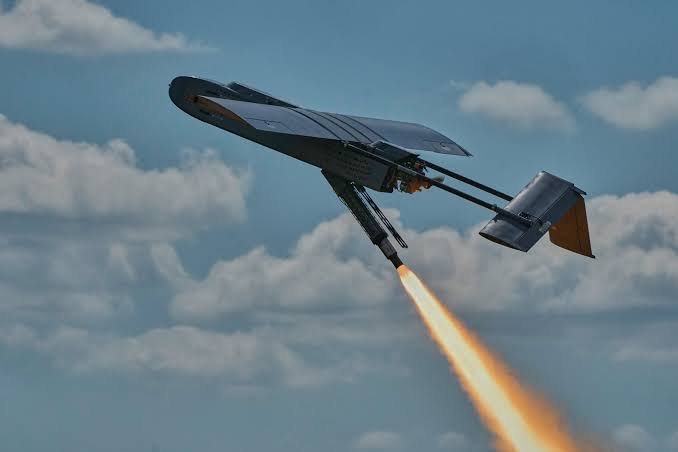
Ukraine launched nearly 900 drones toward Russia overnight as the war entered another dangerous phase of long range attacks, while President Volodymyr Zelenskyy warned that Russian forces were preparing what he described as a massive aerial assault against Ukraine.
The scale of the Ukrainian drone operation was reported by Russia’s Defense Ministry, which said its air defenses intercepted nearly 900 drones over multiple Russian regions, occupied Crimea and the Sea of Azov.
Russian authorities also reported that hundreds of drones were directed toward the Moscow region.
The escalation came as Ukrainian officials warned that Russia was preparing another major attack against Ukrainian cities and infrastructure.
Zelenskyy said updated intelligence indicated that Russia was preparing a massive strike and that Ukraine was preparing countermeasures.
The developments demonstrate how drone warfare has become one of the defining features of the Russia Ukraine conflict.
Rather than remaining concentrated along the front line, the war increasingly involves long range attacks against military, energy, industrial and logistical targets deep inside each country’s territory.
Nearly 900 Ukrainian Drones Reported
Russia’s Defense Ministry said its forces intercepted nearly 900 Ukrainian drones during the overnight operation.
Moscow Mayor Sergei Sobyanin said approximately 650 drones were heading toward the Moscow region between Monday evening and Tuesday morning, with 105 intercepted as they approached the capital.
He later reported that another 68 drones were destroyed during daylight hours.
The reported scale is extraordinary even by the standards of a war in which drone attacks have become routine.
Ukraine has developed increasingly sophisticated long range unmanned systems capable of reaching targets hundreds of kilometres inside Russia.
Kyiv has used those capabilities to target military installations, fuel depots, refineries and other infrastructure that it says supports Russia’s war effort.
Russia has responded with its own expanding fleet of drones and missiles against Ukrainian cities and critical infrastructure.
The result is a cycle in which both sides increasingly attempt to strike the other side’s economic and military depth.
A Fuel Depot Near Moscow Was Reportedly Hit
The overnight Ukrainian attack also produced reports of a major fire at a fuel facility in the Moscow region.
Russian officials reported that two people were killed.
The incident highlights why energy infrastructure has become a major target in the conflict.
Fuel is essential to military operations, transport and industrial production.
Ukraine has repeatedly targeted Russian refineries and storage facilities in an attempt to disrupt the supply chain supporting the Russian economy and armed forces.
Ukrainian officials recently claimed that their attacks had disabled around 51 percent of Russia’s oil refining capacity.
That figure has not been independently verified.
Russian President Vladimir Putin has said Ukrainian attacks have imposed economic costs, while Moscow has responded with measures including restrictions on some fuel exports.
The impact has therefore extended beyond the battlefield.
Ukraine’s Strategy Is Moving Deeper Into Russia
Ukraine’s long range strikes represent a major change from the early stages of the full scale war.
During the initial phase of the invasion, Russia possessed significant advantages in air power and missile capability.
Ukraine relied heavily on Western supplied air defense systems and conventional military forces to prevent Russian forces from capturing major cities.
Over time, however, Ukraine developed domestic drone production and expanded its ability to conduct long range attacks.
Those weapons have allowed Ukrainian forces to strike targets far from the front line.
The objective is not necessarily to capture territory.
Instead, the strategy seeks to impose costs on Russian military logistics, fuel production and industrial infrastructure.
That approach creates a different form of pressure.
If Russian refineries, fuel depots and logistics facilities are repeatedly attacked, Moscow may have to divert air defenses away from the front line to protect infrastructure deeper inside the country.
Russia Is Preparing Its Own Major Attack
While Ukraine was launching drones into Russia, Zelenskyy warned that Moscow was preparing another large aerial operation.
The Ukrainian president said intelligence indicated that Russia was preparing a massive strike.
Ukrainian officials have also warned about Russia’s stockpile and production capacity for ballistic missiles.
Ukraine’s foreign minister Andrii Sybiha has said Kyiv estimates Russia has hundreds of ballistic missiles in reserve and can produce additional missiles each month.
Those estimates cannot be independently verified, but they illustrate the central problem facing Ukrainian air defenses.
Ukraine must protect major cities, power infrastructure, transport systems and military facilities across a large territory.
Russia can therefore force Kyiv to make difficult choices about where to deploy scarce air defense systems.
Patriot Missiles Are a Major Concern
One of Ukraine’s most important defensive assets is the US made Patriot air defense system.
Patriot batteries have been used to defend major Ukrainian population centres and critical infrastructure against Russian ballistic missiles.
But interceptor missiles are expensive and limited in supply.
Ukrainian officials have repeatedly called for additional air defense ammunition from Western partners.
The problem becomes more serious when Russia launches large numbers of missiles and drones simultaneously.
Ukraine may successfully intercept many incoming weapons while still exhausting a significant amount of ammunition.
Russia can also use relatively inexpensive drones to force Ukraine to spend more expensive interceptors.
That creates an economic dimension to the air war.
Russia Continues Attacking Ukrainian Infrastructure
The escalation is occurring alongside continued Russian attacks on Ukrainian infrastructure.
According to AP, Russian forces have targeted bridges and other transport infrastructure in Kyiv and Zaporizhzhia.
Russian attacks have also continued around Ukrainian ports and the Black Sea.
Moscow has accused Ukraine of targeting Russian infrastructure, while Kyiv argues that its strikes are aimed at weakening Russia’s ability to sustain the war.
The attacks on ports have wider international implications because Ukraine remains an important exporter of agricultural products.
Disruptions to shipping can therefore affect international food markets.
A war that began primarily as a territorial invasion has developed into a conflict affecting energy, agriculture, transportation and global trade.
The Black Sea Is Becoming More Dangerous
The latest developments also show the growing risks to commercial shipping in the Black Sea.
AP reported that a drone attack struck two commercial vessels in Bulgaria’s exclusive economic zone, with one vessel sinking and another catching fire.
Bulgarian authorities said the origin of the drones was under investigation.
Ukrainian President Zelenskyy blamed Russia for the attacks.
Russia had not immediately accepted responsibility.
The incident is significant because Bulgaria is a NATO member and the attack occurred inside its exclusive economic zone.
It demonstrates how the geographic consequences of the war can extend into waters used by commercial shipping.
Even when the origin of an attack remains disputed, uncertainty itself creates risks for insurers, shipping companies and crews.
NATO’s Eastern Flank Is Responding
The escalation is also affecting NATO’s military posture in Eastern Europe.
Lithuania has offered to host a permanent US military base, while its parliament is considering legislation concerning the potential deployment of American nuclear weapons.
Russian officials have warned that the movement of additional NATO infrastructure closer to Russia’s borders would increase tensions.
At the same time, NATO countries are strengthening their own air defense and military capabilities.
Sweden has announced plans to deploy Patriot air defense systems and around 100 troops to Poland to help protect the airport at Rzeszow, a major logistics hub for military assistance to Ukraine.
The developments illustrate the security dilemma that has emerged around the war.
Ukraine wants greater Western military support to defend itself.
Russia views expanded NATO military infrastructure near its borders as a security threat.
NATO members argue that their deployments are defensive responses to Russian aggression.
The result is a continuing cycle of military buildup.
Drone Warfare Is Changing Modern Conflict
The scale of the latest attacks provides another indication of how drones are transforming warfare.
Unmanned aircraft are cheaper than many conventional missiles and can be produced in large numbers.
They can also be launched in swarms, forcing defenders to identify and intercept multiple targets simultaneously.
Ukraine has invested heavily in domestic drone production because of its need to compensate for limitations in conventional air power.
Russia has done the same, using large numbers of drones alongside cruise and ballistic missiles.
The conflict is therefore becoming a testing ground for technologies that other militaries are studying closely.
Future wars may increasingly involve large scale attacks against infrastructure carried out by relatively inexpensive autonomous or remotely controlled systems.
The Economic War Behind the Drone War
The Ukrainian campaign against Russian refineries illustrates another important dimension.
Ukraine does not need to destroy Russia’s entire energy industry to create economic pressure.
Repeated attacks can force facilities to operate below capacity, increase repair costs and require additional air defenses.
Russia’s response can then affect international fuel markets.
AP reported that Russian restrictions on diesel exports following attacks on refining facilities have contributed to pressure on global fuel prices.
This demonstrates the international consequences of infrastructure warfare.
A refinery in Russia may appear geographically distant from consumers in Asia, Europe or Africa, but disruptions in Russian fuel production can affect global supply.
Kyiv Faces a Difficult Balance
Ukraine’s long range attacks give Kyiv a way to strike Russian infrastructure beyond the battlefield.
But they also carry risks.
Russia can respond with additional missile and drone attacks against Ukrainian cities.
The greater the damage inside Russia, the stronger the political pressure on Moscow to retaliate.
Ukraine therefore faces a strategic balance between imposing costs on Russia and managing the risk of further escalation.
Western governments face a similar dilemma.
They have provided Ukraine with weapons and intelligence while seeking to prevent the war from expanding into a direct NATO Russia confrontation.
That balance has become more complicated as the geographic range of attacks increases.
A War With No Clear End in Sight
The latest drone exchanges demonstrate that the Russia Ukraine war remains highly dynamic despite years of fighting.
Ukraine is increasing its ability to strike targets deep inside Russia.
Russia continues to possess substantial missile and drone capabilities and is preparing further large scale attacks against Ukrainian territory.
Neither side appears to have abandoned its ability to conduct long range strikes.
The result is a war in which the front line is only one part of the battlefield.
Fuel depots, refineries, bridges, ports, airfields and industrial facilities have all become strategically important.
The Black Sea is increasingly contested.
NATO’s eastern flank is being reinforced.
Air defense systems are under intense pressure.
And civilians remain exposed to the consequences of attacks far from the traditional front line.
The latest Ukrainian drone operation and Zelenskyy’s warning of a possible massive Russian attack therefore represent more than another exchange of weapons.
They show how the war is evolving into a contest of long range strike capacity, industrial resilience and air defense.
As both sides expand their ability to attack targets deep inside each other’s territory, the risks increasingly extend beyond Ukraine and Russia.
For Europe, the United States and countries dependent on Black Sea shipping and global energy markets, the trajectory of the conflict remains a major geopolitical concern.
– Tamrah News War Updates