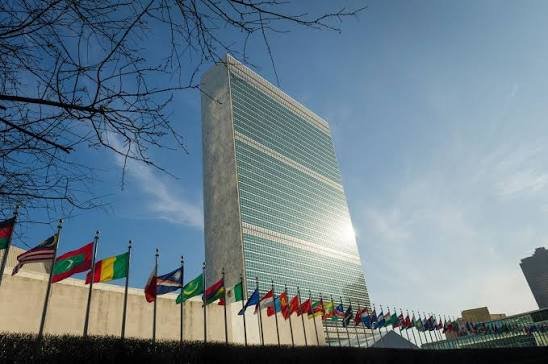
United Nations Secretary General António Guterres has called for an end to the United States Iran war and a return to diplomacy, using a visit to Islamabad to highlight Pakistan’s role in creating conditions for negotiations between Washington and Tehran.
Speaking in Islamabad on October 6, Guterres said the conflict had imposed a heavy cost on the region and the global economy while disrupting international trade and navigation. He urged all parties to end the fighting, restore navigational rights and resolve outstanding disputes through diplomacy and international law.
The intervention came as Pakistan continues to position itself as a diplomatic channel between the United States and Iran following months of conflict that have affected energy markets, shipping and security across the Middle East.
Guterres specifically praised Islamabad’s role, describing Pakistan’s contribution to the US Iran diplomatic process as pivotal. He said Pakistan’s efforts helped produce the June 17 Islamabad Memorandum of Understanding, the subsequent ceasefire and a framework for future negotiations.
The UN secretary general’s remarks give Pakistan’s mediation efforts international recognition at a moment when traditional diplomatic channels between Washington and Tehran remain severely strained.
Why Pakistan Matters in the US Iran Conflict
Pakistan occupies an unusual diplomatic position in the Middle East crisis.
It is a longstanding US partner, maintains deep political, economic and security relationships with Gulf Arab states and shares a border with Iran.
That combination gives Islamabad relationships with parties that do not necessarily trust one another.
Pakistan has also maintained diplomatic relations with Iran despite longstanding disagreements over security, border management and regional policy.
At the same time, Islamabad has extensive relations with Saudi Arabia and other Gulf states and remains connected to Washington through decades of diplomatic and security cooperation.
That positioning has allowed Pakistan to present itself as a possible bridge rather than as a direct participant in the confrontation.
Guterres said the importance of Islamabad’s role was linked to the fact that countries on opposing sides were willing to engage through a trusted intermediary.
The UN chief’s comments therefore point to a broader feature of the current crisis. As direct relations between Washington and Tehran have deteriorated, middle powers may become increasingly important in keeping diplomatic channels open.
The Strait of Hormuz Has Become a Central Issue
The conflict is not limited to military exchanges.
The Strait of Hormuz has become one of the most important pressure points because it is a critical route for global energy shipments.
Large quantities of crude oil, refined petroleum products and liquefied natural gas move through the wider Gulf region every day.
Restrictions on shipping through the waterway can therefore affect countries far beyond the Middle East.
The consequences are already visible in global energy markets.
Oil prices have remained elevated as traders assess the risk of further disruption, while governments and international organisations have considered measures to protect energy supplies and shipping.
The United Nations has warned that the economic consequences of the conflict extend well beyond countries directly involved in the fighting.
For countries dependent on imported energy, prolonged disruption can translate into higher transport costs, rising food prices and increased pressure on household finances.
This makes the diplomatic effort around the conflict an economic issue as well as a security issue.
Guterres Calls for a Return to International Law
Guterres used his Islamabad appearance to emphasise the importance of international law.
He called for the restoration of navigational rights and freedoms while urging the parties to return to negotiations.
The appeal reflects a broader concern at the United Nations over the erosion of diplomatic mechanisms during major international conflicts.
When military confrontation becomes the primary instrument of state policy, the risks can extend beyond the original dispute.
Regional actors may become involved. Commercial shipping can be disrupted. Energy prices can rise. Civilian infrastructure can be damaged. And neighbouring countries can face pressure to choose sides.
The longer such conflicts continue, the more difficult diplomatic settlement can become.
That is why mediation efforts by countries such as Pakistan can become significant even when they do not immediately produce a comprehensive peace agreement.
Pakistan’s Diplomatic Position
Pakistan’s foreign policy has historically emphasised dialogue, sovereignty and peaceful settlement of disputes.
During the current crisis, Islamabad has sought to maintain communication with both sides rather than publicly presenting itself as a military participant in the confrontation.
Foreign Minister and Deputy Prime Minister Ishaq Dar has said Pakistan’s mediation efforts helped bring Washington and Tehran into direct dialogue.
Guterres similarly credited Pakistan with helping create the conditions for negotiations.
That recognition matters because mediation requires confidence from competing parties.
A mediator cannot force either side to accept an agreement.
Its influence comes from maintaining channels of communication that remain available even when direct diplomacy breaks down.
Pakistan’s geographic position also matters.
The country borders Iran to the west and has longstanding strategic relationships with Gulf Arab states. It is also a major regional military power and a significant contributor to United Nations peacekeeping operations.
Those factors give Islamabad a diplomatic profile that differs from that of smaller neutral states.
The Conflict Is Spreading Beyond the Gulf
The consequences of the US Iran conflict are already being felt across a wider geographical area.
The conflict has intersected with fighting in Yemen, where Iran aligned Houthi forces are confronting Saudi backed Yemeni forces near the strategically important Bab el Mandeb Strait.
The Red Sea and Gulf of Aden are connected to the broader global shipping system.
Any sustained disruption in both the Strait of Hormuz and Bab el Mandeb could force commercial vessels to take longer routes while increasing insurance and transportation costs.
Recent fighting in Yemen has therefore become another layer of the wider regional crisis.
The United States and its partners face a difficult calculation.
More military involvement could potentially protect shipping and deter attacks, but it could also widen the conflict.
Diplomacy offers a path toward reducing those risks, but reaching an agreement requires concessions from parties that remain deeply divided.
The Palestinian Question Remains Central
Guterres also linked the wider regional crisis to the Palestinian issue.
He said there could be no lasting peace in the region without recognition of the Palestinian people’s right to self determination.
That position reflects a longstanding UN view that the Israeli Palestinian conflict remains one of the central unresolved political issues in the Middle East.
The statement came as the situation in Gaza remains unresolved despite the existence of a US backed political framework.
Israel continues to maintain military control over large parts of Gaza while negotiations over Hamas disarmament, Israeli withdrawal and reconstruction remain incomplete.
The regional conflicts are therefore interconnected.
The Gaza war has affected relations between Israel, Iran, Arab governments and Western powers. The US Iran confrontation has affected Gulf security and shipping. Fighting in Yemen has created another pressure point around international trade.
A political settlement in one theatre could therefore have consequences across the wider region.
What Pakistan Can and Cannot Do
Pakistan’s diplomatic role should not be interpreted as giving Islamabad control over the conflict.
Washington and Tehran ultimately determine whether they are prepared to accept a negotiated settlement.
Pakistan can facilitate communication, host meetings and provide diplomatic channels.
It cannot impose an agreement.
The significance of Guterres’ remarks is therefore less about Pakistan becoming the primary power in the crisis and more about the growing importance of intermediary states.
In an increasingly fragmented international system, countries that can communicate with opposing camps may become important diplomatic assets.
That is particularly true when major powers struggle to communicate directly.
A Wider Test for Diplomacy
The US Iran war is testing more than the military capabilities of the countries involved.
It is also testing whether international diplomacy can prevent regional conflicts from becoming prolonged wars with global economic consequences.
The United Nations has repeatedly warned about the costs of escalation.
Guterres’ appeal from Islamabad reflects that concern.
His message was direct: the conflict should end, diplomacy should resume and international navigation rights should be restored.
Pakistan’s role gives that message an additional dimension.
Islamabad is not positioned as a substitute for Washington, Tehran or the United Nations. Instead, it is attempting to keep communication possible between governments whose relations have deteriorated sharply.
Whether that effort can produce a durable political settlement remains uncertain.
What is clear is that the conflict has already expanded beyond the immediate military confrontation.
It now affects global energy markets, commercial shipping, Gulf security and diplomatic relations across several regions.
The international pressure for a return to negotiations is therefore likely to grow as the economic and humanitarian costs increase.
For Pakistan, the diplomatic recognition from the UN secretary general represents a significant moment in its regional foreign policy.
For Washington and Tehran, however, the central question remains unchanged: whether military confrontation can ultimately be replaced by a political process capable of addressing the security, territorial and economic disputes driving the crisis.
Until that happens, the conflict will continue to pose risks far beyond the borders of the United States and Iran.
– Tamrah News Politics