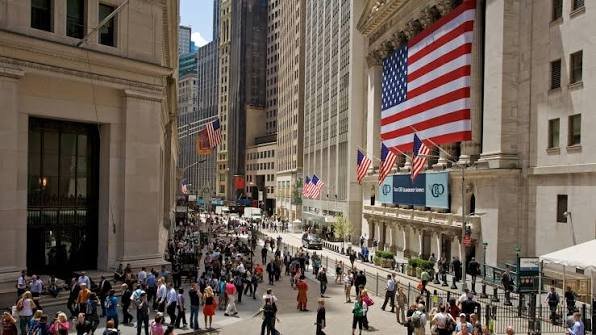
Wall Street is approaching another record high while ordinary consumers are facing an increasingly bleak economic outlook, exposing a growing divide between financial markets and the real economy.
The S&P 500 climbed to a new record on Tuesday, extending a powerful rally driven largely by expectations surrounding corporate investment in artificial intelligence. The index has risen sharply from its March low, while the Nasdaq has also reached record levels.
Yet the optimism on Wall Street stands in stark contrast to consumer sentiment.
Consumer confidence has fallen to its lowest level in more than a decade, with households increasingly concerned about employment, inflation and their ability to keep up with the cost of living.
The contradiction is becoming one of the defining features of the global economy.
Markets Are Booming While Confidence Falls
The S&P 500 rose nearly 1 percent on Tuesday, moving above 7,840 and surpassing its previous record from August.
The Nasdaq also reached another record as investors continued to pour money into technology and artificial intelligence companies.
Corporate earnings have helped sustain the rally, with investors expecting another quarter of strong profits from major American companies.
The market’s performance suggests that investors believe the US economy can continue expanding despite geopolitical instability, high government debt and persistent concerns about inflation.
But stock market performance tells only part of the story.
For millions of households without substantial investment portfolios, rising share prices provide little immediate relief.
The Stock Market Is Not the Whole Economy
Economists have long warned against treating stock market performance as a direct measurement of household prosperity.
The latest divergence makes that distinction particularly visible.
People who own significant amounts of stocks, retirement accounts and other financial assets can benefit substantially when markets rise.
Households living from paycheck to paycheck experience the economy differently.
Their primary concerns are rent, food, energy, healthcare, transportation and employment.
If wages fail to increase faster than the cost of living, a record stock market does little to improve their financial position.
Bill Adams, chief US economist at Fifth Third Commercial Bank, described the situation as another example of the difference between Wall Street and the real economy.
The divide is especially significant because wealthier households are more likely to own financial assets and therefore benefit directly from market appreciation.
Artificial Intelligence Is Driving the Rally
One of the biggest forces behind the current market optimism is artificial intelligence.
Technology companies are spending enormous amounts on data centres, advanced computing infrastructure and AI systems.
Investors are betting that these investments will generate substantial productivity gains and new revenue streams.
The enthusiasm has pushed valuations across parts of the technology sector higher and helped lift broader market indexes.
The question is whether the economic benefits of the AI boom will eventually spread beyond shareholders and technology companies.
If AI produces significant productivity improvements, businesses could eventually reduce costs, create new industries and increase economic output.
But there is another possibility.
The gains could remain concentrated among the companies, investors and highly skilled workers positioned to benefit from the technology.
That would deepen an inequality problem that already exists.
The Unequal Recovery
The current market environment is increasingly creating two different economic realities.
For wealthy households with substantial investments, rising markets can create a powerful wealth effect.
Higher portfolio values can support additional spending and investment.
For lower income households, the situation is different.
They are more exposed to food prices, housing costs, interest rates and changes in employment.
They may also have little or no exposure to the stock market.
That means a household can experience an economy that feels considerably worse even while financial markets are reporting record performance.
This is why consumer confidence can deteriorate at the same time that stock indexes rise.
The two indicators are measuring different realities.
The Jobs Problem
Employment is another important part of the divide.
The US labour market has continued to add jobs, but employment growth has slowed.
Wage increases have also struggled to keep pace with the financial pressures facing many households.
For workers without substantial savings or investment assets, even modest increases in wages can disappear quickly when housing, food and other essential costs rise.
That creates a dangerous psychological gap.
Official economic indicators may suggest resilience while households experience increasing financial pressure.
When that gap becomes too large, political dissatisfaction can increase even when headline economic growth remains positive.
Who Benefits From a Record Market?
The most important question is therefore not whether Wall Street is performing well.
It is who benefits from that performance.
The answer is disproportionately households that already possess financial assets.
Older Americans with substantial retirement savings can benefit from rising stock prices.
High income households with investment portfolios can gain additional wealth.
Large corporations can raise capital more easily when investor confidence is strong.
Meanwhile, households without significant investments remain dependent primarily on wages.
This creates a feedback loop.
Those who already possess wealth can accumulate more wealth when asset prices rise.
Those without assets have fewer opportunities to participate in the boom.
The result can be an economy in which aggregate wealth increases while economic security becomes less evenly distributed.
The Political Consequences
The divergence between financial markets and household sentiment is also becoming politically important.
Governments can point to record stock indexes as evidence that economic policy is working.
Opposition parties can point to falling consumer confidence, high living costs and weak wage growth as evidence that ordinary people are being left behind.
Both arguments can contain elements of truth.
The financial markets are genuinely strong.
The economic pressures facing many households are also genuine.
The challenge is that market success does not automatically translate into broad based prosperity.
The Global Implications
The same phenomenon is appearing beyond the United States.
Investors around the world are increasingly concentrating capital in technology, artificial intelligence and other high growth sectors.
At the same time, governments face high borrowing costs, elevated debt and pressure to maintain public services.
Global markets have recently received support from falling oil prices and easing bond yields, providing relief to investors.
But lower market pressure does not necessarily solve the structural problems facing households.
Housing affordability, wage stagnation, public debt and wealth concentration remain significant challenges across developed economies.
A Record Market Cannot Hide an Unequal Economy
The current Wall Street rally may continue.
Corporate earnings remain strong, artificial intelligence investment is accelerating and investors continue to expect substantial technological growth.
But the record highs contain an important warning.
A financial market can prosper even when a large part of the population feels economically insecure.
That does not mean the stock market is artificial or that economic growth is entirely absent.
It means that economic success must be measured more broadly than through indexes and corporate profits.
If rising asset prices primarily increase the wealth of people who already own assets, while millions of workers continue struggling with basic living costs, the economy may become increasingly disconnected from the people it is supposed to serve.
Wall Street can reach another record tomorrow.
The more important question is whether ordinary households will feel that record in their own lives.
– Tamrah News Business and Markets