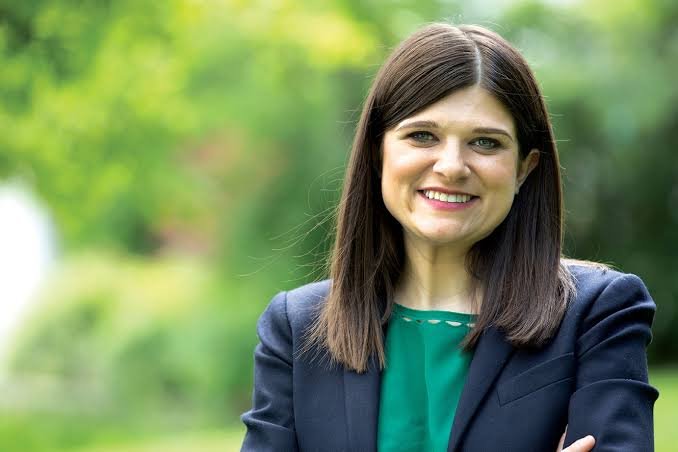
Democratic Representative Haley Stevens of Michigan endorsed Republican Senate candidate Mike Rogers on November 1, 2026, in a dramatic cross-party move just two days before the election. Stevens, who had lost the Democratic primary earlier in the year to Abdul El-Sayed, appeared alongside Rogers at Perfecting Church in Detroit and then released a video statement making the endorsement official. The decision intensified an already bitter public feud within Michigan Democratic circles and injected new uncertainty into one of the nation’s most closely watched Senate contests.
In her video, Stevens stated that El-Sayed had made clear she was no longer welcome in his campaign and should stay away. “And he’s right,” she said, “and that’s why I am endorsing Mike Rogers for the United States Senate today.” She added that “who we are as Michiganders is not hate, and it is not what we are getting out from our Democratic nominee right now.” Stevens continued to describe herself as a “very proud Democrat” while explaining her choice. She also referenced associations of the El-Sayed campaign with figures such as streamer Hasan Piker, indicating she did not stand with that direction.
Rogers welcomed the endorsement, saying he was honored by Stevens’ support and noting that the two had spoken by phone that morning. The pair’s joint appearance at the Detroit church provided a high-visibility moment in the final stretch of the campaign. President Donald Trump praised Stevens on social media, calling the endorsement a demonstration of loyalty to the people of Michigan and describing it as almost unprecedented.
The background to the rupture includes a contentious August primary in which El-Sayed defeated Stevens. After the primary, Stevens had initially indicated she would support the Democratic ticket. Tensions flared again in the final days over a political action committee advertisement that Stevens criticized and that El-Sayed’s campaign sought distance from. El-Sayed’s team reportedly asked Stevens not to attend planned unity events, including a church appearance that had been expected to feature both Democrats. Stevens’ subsequent decision to appear instead with the Republican nominee marked a complete break.
Michigan’s Senate seat is open because incumbent Democrat Gary Peters is not seeking re-election. The race between Rogers, a former Republican congressman, and El-Sayed is widely viewed as competitive and potentially decisive for overall Senate control. Republicans held a 53-47 edge heading into the election cycle. Any erosion of Democratic unity in a key battleground state carries national implications.
El-Sayed responded by downplaying the significance of Stevens’ move, telling reporters he did not think about her and focusing instead on contrasts with Rogers. Democratic officials and activists expressed a range of reactions, from disappointment to accusations that the endorsement undermined party efforts at a critical moment. Stevens framed her choice as a matter of conscience and of representing what she believes Michigan voters expect.
The episode highlights the depth of division left by the primary. Stevens had been a prominent figure in Michigan Democratic politics; her decision to back the Republican in the general election is rare at this level and this late in a campaign. It also underscores how personal and ideological fractures can override traditional party discipline when candidates feel publicly rejected by their own nominee’s operation.
Media coverage treated the endorsement as a significant development capable of influencing late undecided voters, particularly in communities where Stevens retained residual support. The visual of a sitting Democratic member of Congress standing with the Republican Senate nominee at a Detroit church supplied a powerful image for Rogers’ closing argument. For El-Sayed, the story created an unwanted distraction in the final 48 hours.
Stevens’ statement carefully avoided a full ideological realignment. She presented the endorsement as a specific response to how she had been treated and to the tone of the Democratic campaign rather than a conversion to Republican politics. That framing may limit the long-term political cost to her within the Democratic Party, though the immediate effect is to complicate the party’s closing message in Michigan.
The Michigan Senate race had already drawn substantial national attention and spending. The late endorsement adds a human and dramatic element that is likely to dominate local and national political discussion until the polls close. Whether it shifts a meaningful number of votes remains to be measured, but the symbolic damage to Democratic unity is clear.
In the hours after the announcement, both campaigns adjusted their final messaging. Rogers emphasized bipartisan appeal and the willingness of a Democrat to cross lines. El-Sayed’s team sought to keep the focus on policy differences and on Rogers’ record. Stevens herself continued to describe the decision as personal and private even as she made it highly public.
The events of November 1 therefore transformed a simmering intra-party conflict into an open endorsement of the opposing party’s candidate. In a closely contested race that could help determine which party organizes the Senate, the development stands as one of the more striking late-campaign surprises of the 2026 cycle.