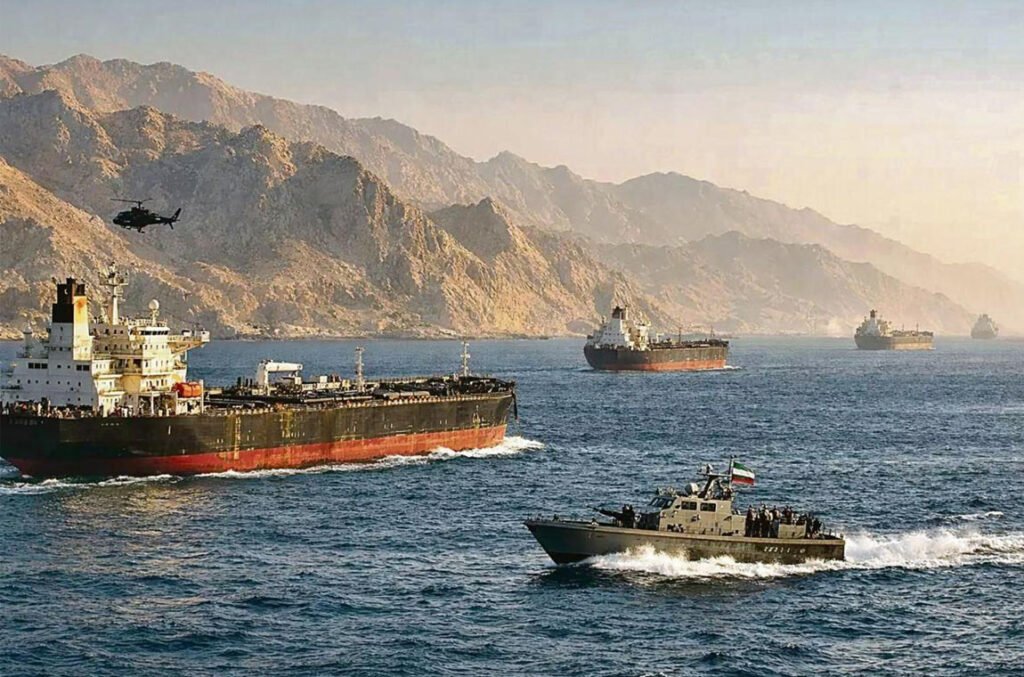
Iran’s Islamic Revolutionary Guard Corps Navy claimed that two mega tankers hit mines in the Strait of Hormuz after attempting to cross the waterway on routes Tehran considers unauthorized.
According to the IRGC tanker claims reported by Iranian state media, the two supertankers hit mines while carrying approximately 2 million barrels of crude oil each. The IRGC Navy statement said the first tanker struck a naval mine that triggered an explosion and a fierce fire. The second vessel hit a mine that left it immobilized and engulfed in a massive blaze.
The IRGC stated that both vessels had switched off their radar systems and positioning equipment before attempting the transit. Iranian officials described the chosen path as an unauthorized route Hormuz that violated regulations imposed by Tehran since it asserted control over the strait. The IRGC Navy statement framed the incidents as the result of the tankers ignoring warnings and attempting to pass through a prohibited zone.
No vessel names, flags, or ownership details were released in the initial IRGC tanker claims. There has been no independent confirmation mines of the reported strikes from shipping registries, insurers, flag states, or major maritime monitoring organizations. The Joint Maritime Information Center previously assessed similar IRGC claims about two supertankers hit mines and stated there was no substantiation for those reports.
The Strait of Hormuz mines allegations form part of a broader pattern of IRGC statements regarding shipping in the strategic waterway. The strait carries a significant share of global oil trade, and any disruption carries immediate implications for energy markets. The reported tanker fire Hormuz incidents added to existing concerns about navigational safety in the area.
Iranian state media emphasized that the vessels had deactivated their systems and chosen a southern route that Tehran does not authorize. The IRGC Navy statement warned that continued use of unauthorized routes would expose ships and the oil companies involved to greater costs. Subsequent IRGC statements referred to additional tankers being affected in the following days, though independent verification remained absent.
Maritime agencies have maintained advisories highlighting the elevated risk environment in and around the Strait of Hormuz. The combination of claimed naval mines Strait of Hormuz, reported attacks, and restricted transit options has reduced the volume of commercial traffic willing to make the passage. Operators that continue to transit often do so under heightened security protocols and with limited public tracking data.
The absence of independent confirmation mines has led analysts and shipping sources to treat the IRGC tanker claims with caution. While Iranian media broadcast statements and in some cases footage said to show burning vessels, external confirmation of the specific cause—naval mines versus other forms of attack—has not been established in public reporting.
The 2 million barrels crude figure cited for each of the two mega tankers underscores the potential scale of any verified incident. A successful mine strike on fully laden supertankers would represent a significant event for both the vessels involved and the broader energy supply chain. The radar systems switched off detail forms a consistent element across the IRGC accounts of the alleged passages.
Hormuz shipping disruption has already influenced global oil prices and insurance costs for vessels operating in the region. The latest Iran mega tankers mines claims add another layer to the uncertainty surrounding safe transit. Shipping companies, charterers, and insurers continue to monitor official advisories and independent assessments rather than relying solely on unilateral statements.
Further information from Iranian authorities, maritime monitoring centers, or the operators of any affected vessels would be required to clarify the status of the reported incidents. Until such confirmation emerges, the IRGC Navy statement regarding the two supertankers hit mines remains an unverified claim within the ongoing contest over control and access in the Strait of Hormuz.
The strategic importance of the waterway ensures that any credible report of naval mines Strait of Hormuz or successful attacks on large crude carriers will continue to draw close attention from energy markets, naval forces, and commercial shipping interests. The current set of IRGC tanker claims fits into that larger pattern of competing narratives about security and authority in one of the world’s most critical maritime chokepoints.