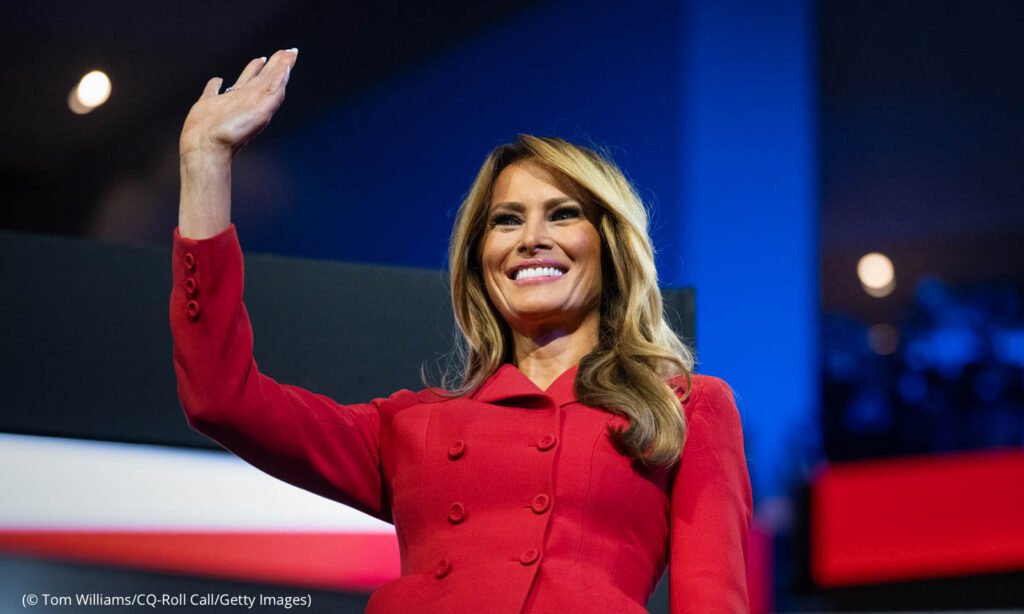
The White House announced Friday that First Lady Melania Trump has secured a localized ceasefire between Russia and Ukraine in the Russian-occupied southern Ukrainian city of Oleshky.The temporary cessation of military action is set to begin on October 29. Both nations agreed to halt all military operations in the city to allow humanitarian aid to enter and to prepare a civilian evacuation through a designated safe passageway.
The White House stated that Melania Trump and one of her representatives worked directly with Russian and Ukrainian leadership to define the terms of the agreement. She was described as the exclusive intermediary for the process.Oleshky, located in the Kherson region and occupied by Russian forces since February 2022, has been described as a front-line war city on the brink of disaster. Its remaining population, estimated between 1,700 and 2,000 people, consists primarily of elderly residents who urgently need medical attention, medicine, food and clean water. Approximately fifty children also remain in the city.
Residents face limited electricity, mined roads, and regular military attacks.“The situation in Oleshky is dire,” Melania Trump said in the White House statement. “Without my intervention, the possibility to bring humanitarian aid into the city and to evacuate the elderly would be impossible.” She added that non-military civilian leaders from both countries would work together to visit residents in their homes and determine the level of assistance required.
Residents wishing to evacuate would receive coordinated support and transportation to their preferred destination, with some expected to choose Russia and others Ukraine.The First Lady initiated discussions after the city came to her attention during a private conversation at the 81st United Nations General Assembly. A preexisting communication channel previously used to facilitate the reunification of children was employed. Both sides assigned teams to work on technical procedures, including demining heavily mined roads.
The White House stated that all parties had worked around the clock since the initiative began.Kremlin spokesman Dmitry Peskov confirmed the ceasefire agreement and welcomed Melania Trump’s contribution to coordinating the humanitarian operation. Ukrainian officials, including parliament faction leader David Arakhamia and human rights ombudsman Dmytro Lubinets, also confirmed preparations for an operation to establish permanent humanitarian corridors.
Lubinets thanked Melania Trump and her team for leadership in coordinating the negotiating teams.The agreement represents an unusual diplomatic role for a United States First Lady. President Donald Trump credited the initiative to his wife when asked by reporters, stating that both sides had wanted to proceed once contacted. The localized nature of the ceasefire means it applies only to Oleshky and does not extend to the broader conflict.Oleshky’s pre-war population of approximately 24,000 has been reduced dramatically by the fighting and occupation.
Remaining residents have reported deepening shortages for months. The planned visits by civilian leaders aim to assess individual needs before organized evacuations begin. Transportation will be provided under coordinated arrangements to ensure safety through the designated passageway.
International observers noted the significance of any successful localized truce in a front-line area. The involvement of non-military personnel from both sides in home visits is intended to build confidence in the process. Further technical details on demining, aid delivery schedules, and evacuation logistics continued to be finalized between the parties.
The White House emphasized that the ceasefire would create the conditions necessary for immediate humanitarian relief. Melania Trump’s office presented the agreement as a direct response to the urgent needs of the remaining civilian population. Implementation beginning October 29 will test the durability of the localized arrangement and the cooperation between the assigned civilian teams.
This development occurs against the backdrop of ongoing broader hostilities and mixed messages regarding other aspects of support for Ukraine. The focus of the Oleshky agreement remains strictly humanitarian. Updates on the number of residents choosing evacuation and the volume of aid delivered were expected once the ceasefire takes effect.